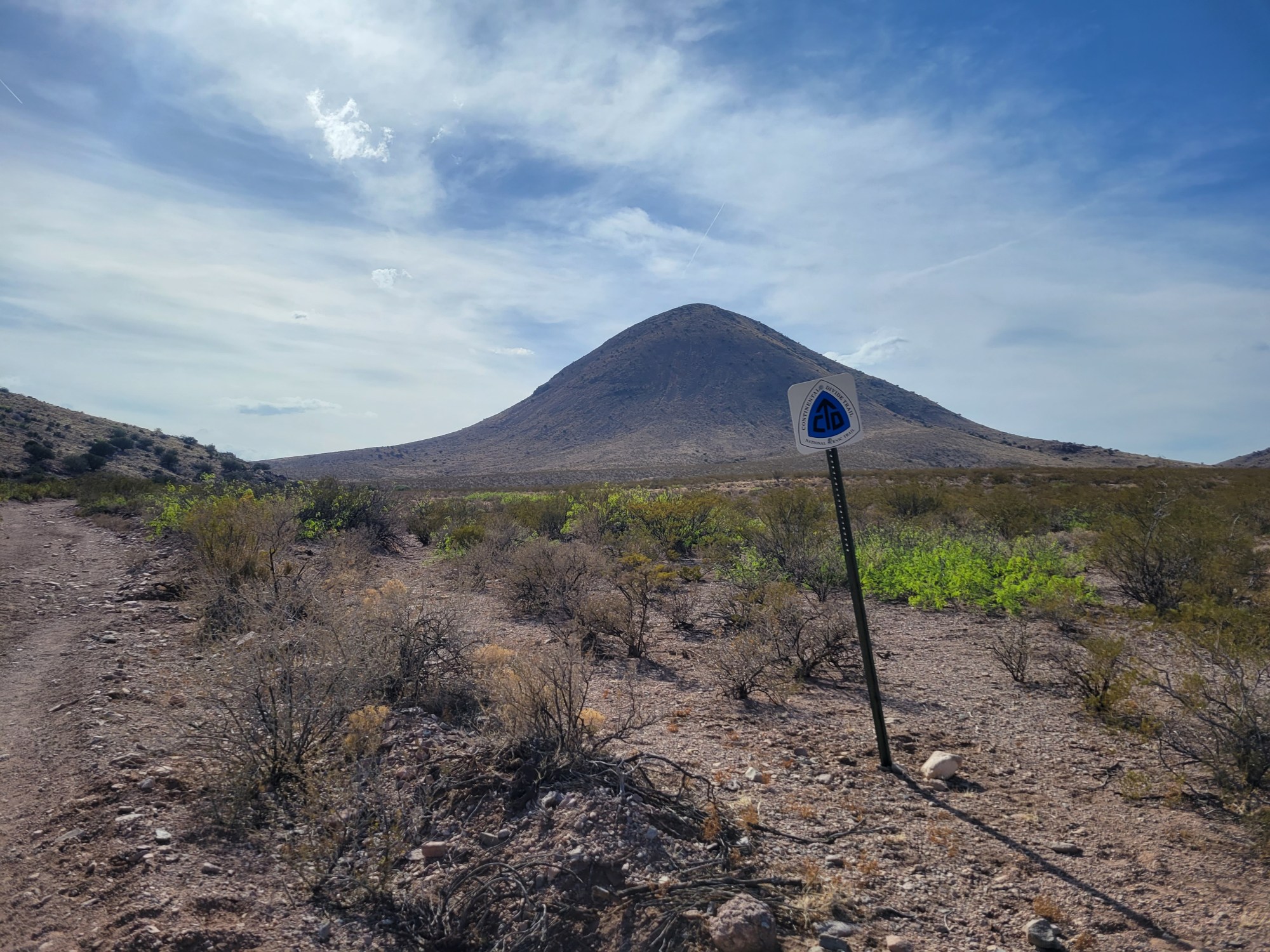
I’m writing this in Lordsburg, New Mexico (Mile 84.1). If I tried to make this first stretch fit into one post it would be excessively long. This post will be about the scenery and what it’s like to hike in New Mexico’s bootheel. If you’re looking for more of a trail journal, check out the posts with mileage numbers in the titles. This is meant to be a companion post.
I thought I knew what the desert would be like. It’s a desert. It’s got sand and the occasional cactus and brutal heat and no water. I was stoked for the clear night skies, but I was worried it would be something I would endure rather than enjoy. I needn’t have been concerned. The first few days out here were one of the biggest physical challenges I’ve ever faced, but the entire week has been a joy and I’m excited to see what the desert north of Lordsburg has to offer.
The Life
There’s plenty of dead stuff in the desert, sure, but so much is alive and thriving. There are tons of shrubs, grasses, and cactuses. There are trees, although big ones are rare, to the point where another hiker was talking about a shade tree they sat under about 10 miles back, and I did not need him to clarify which one.
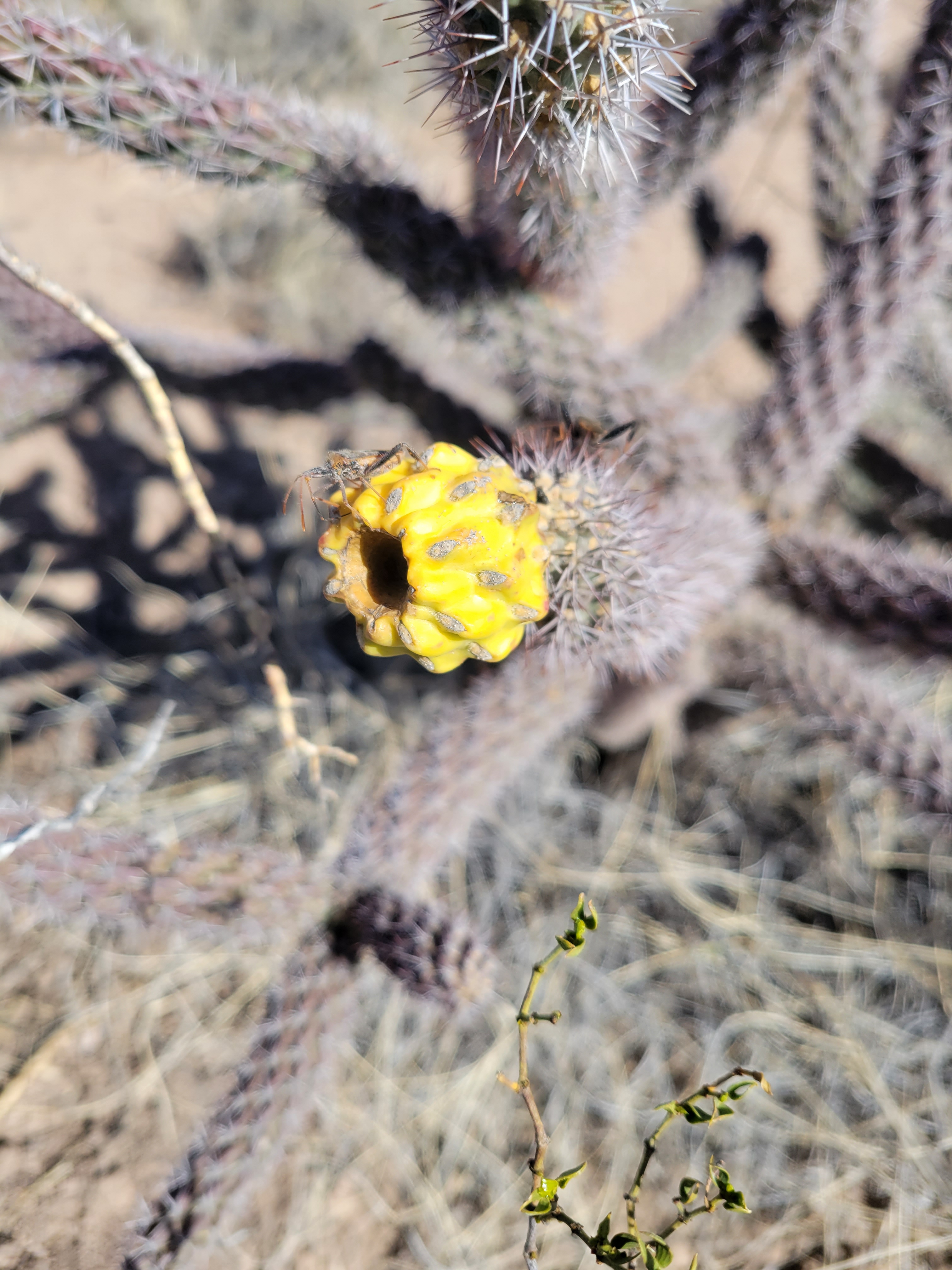
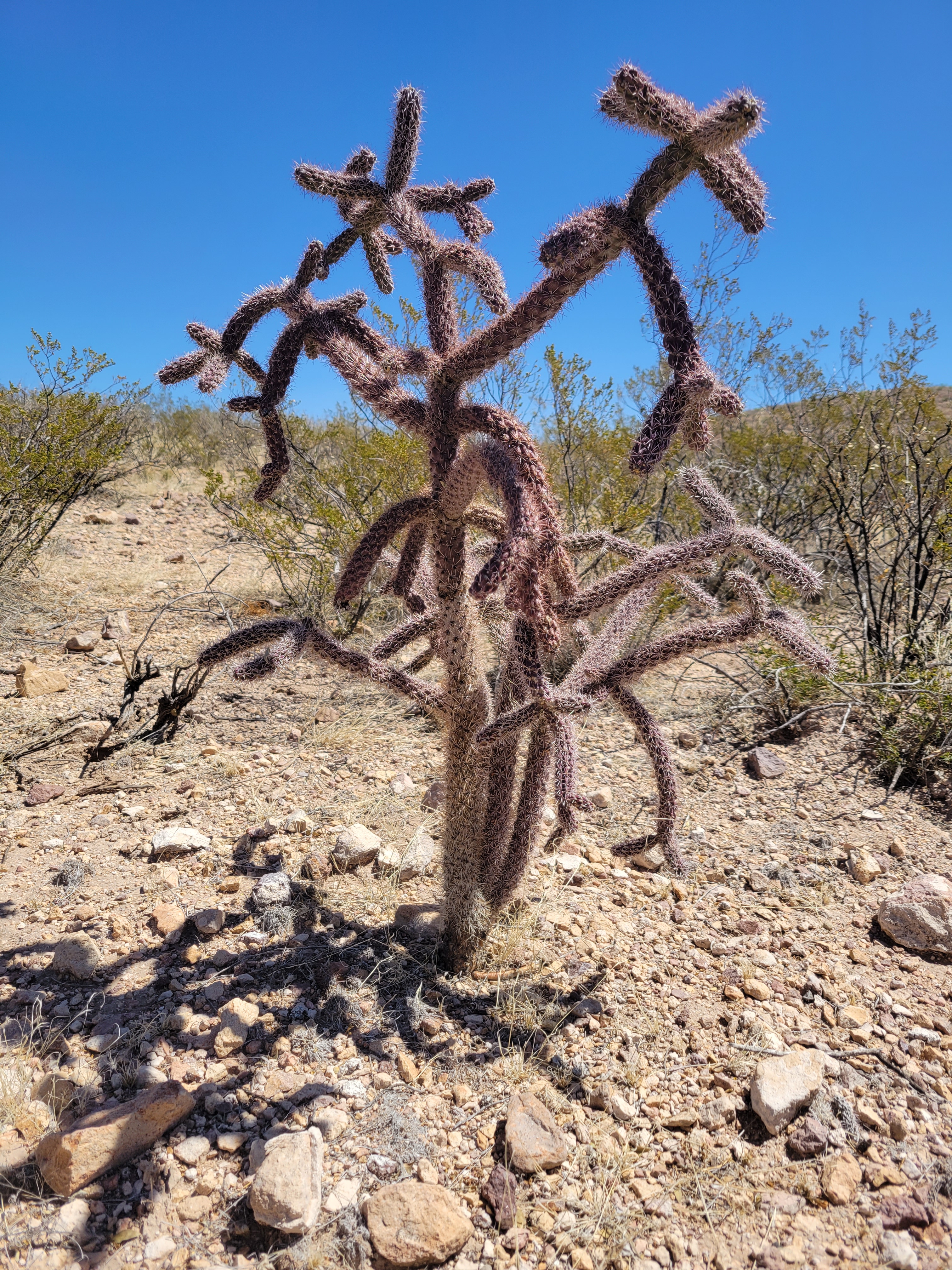
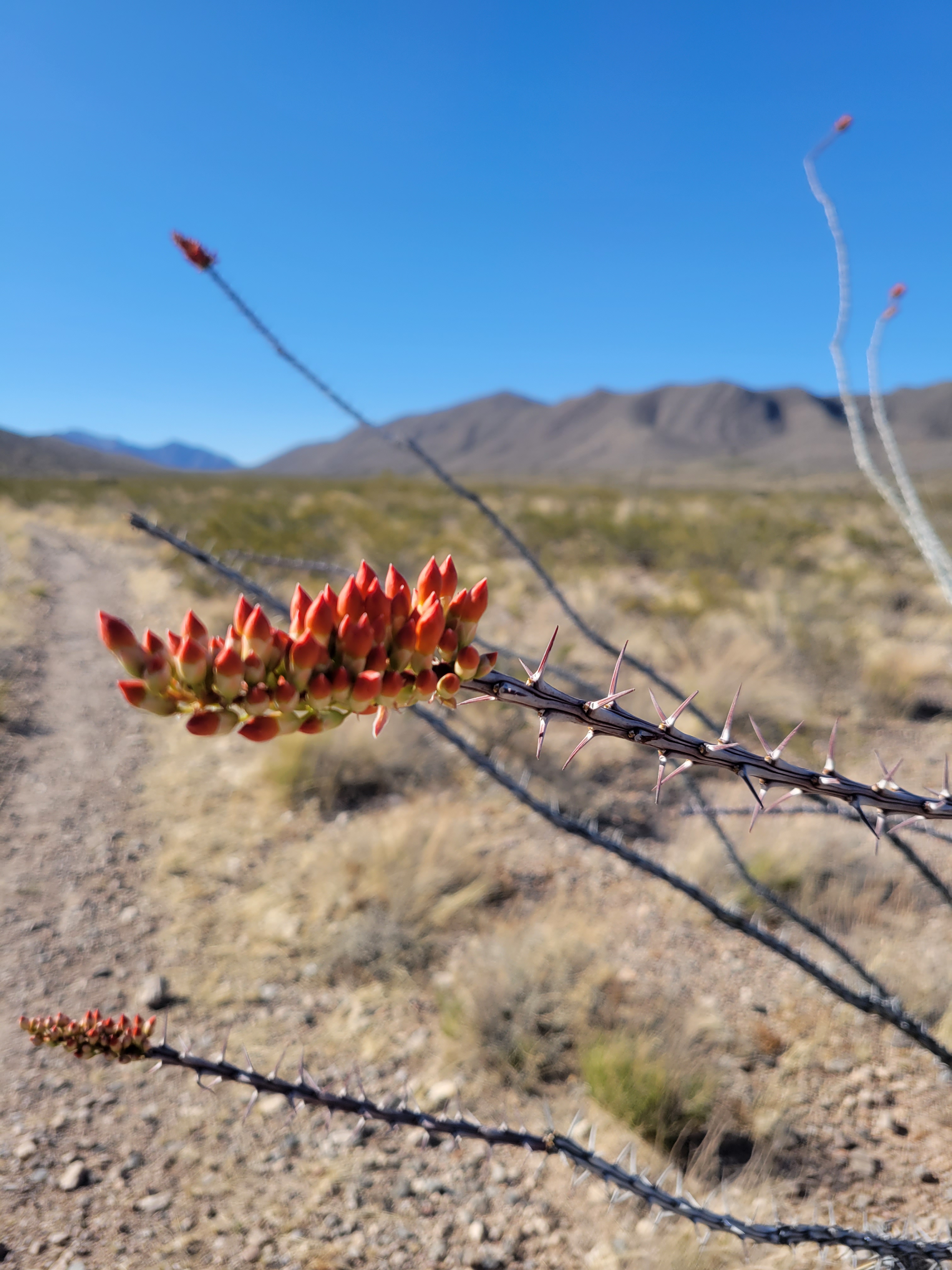
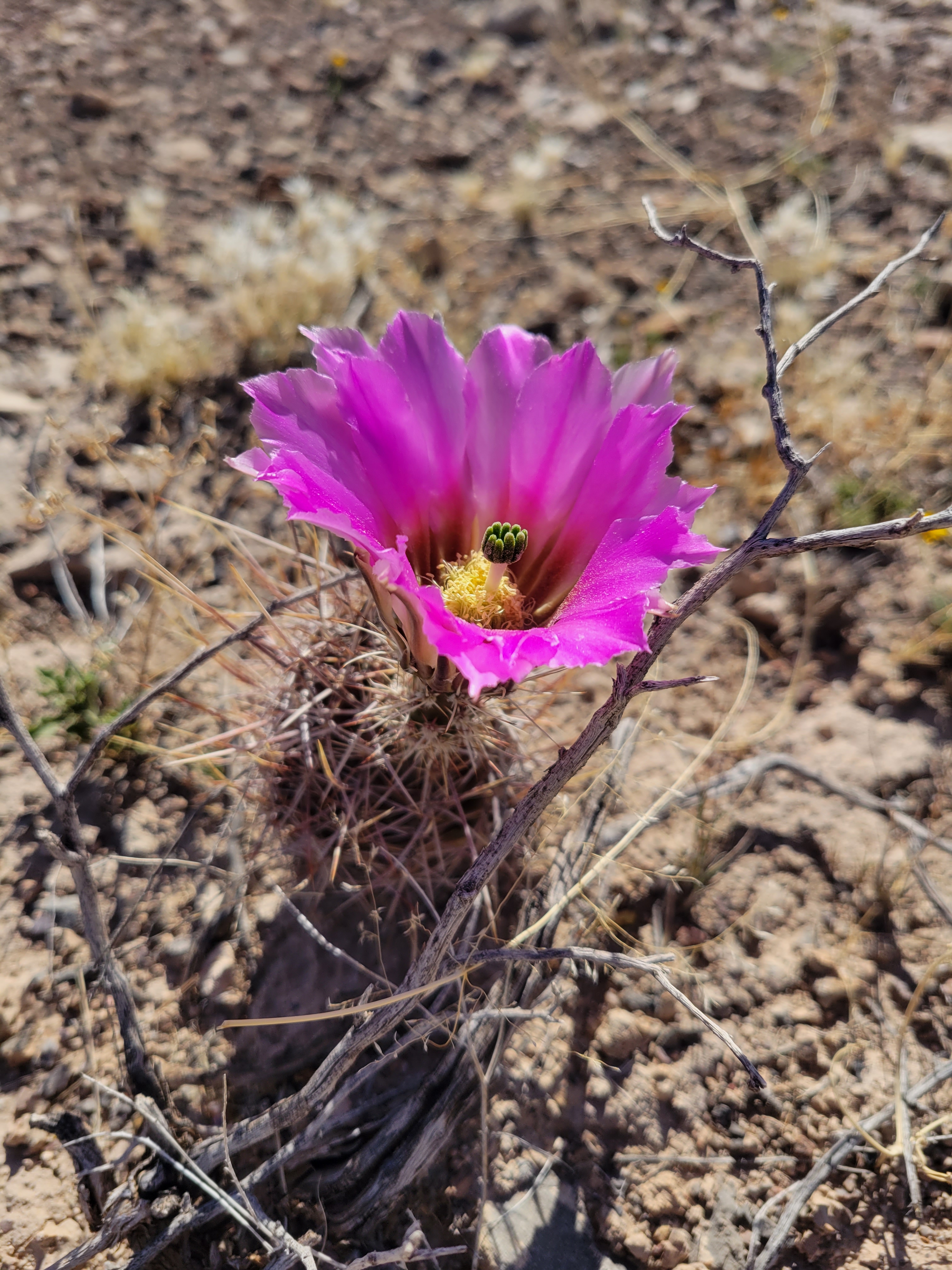
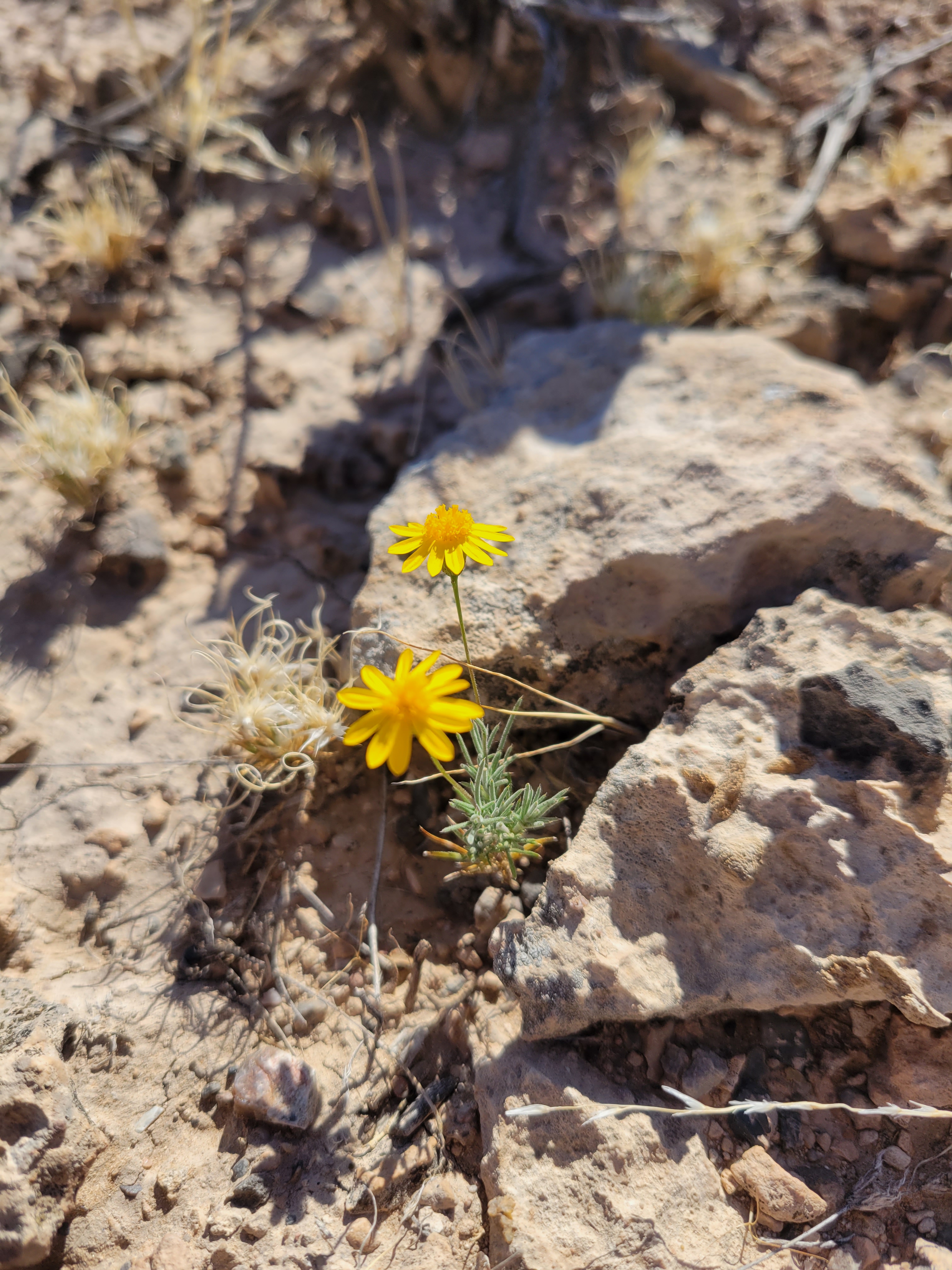
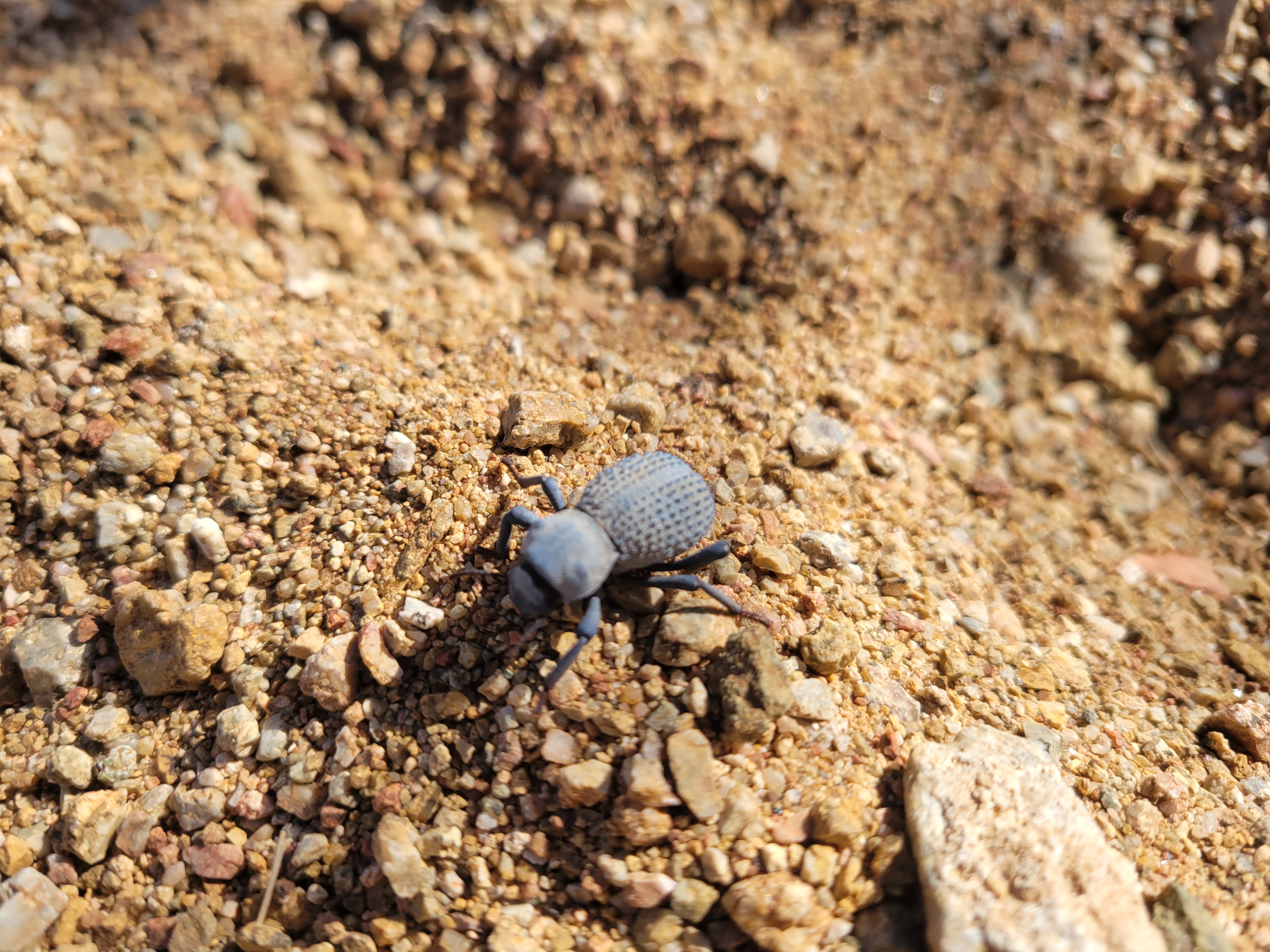
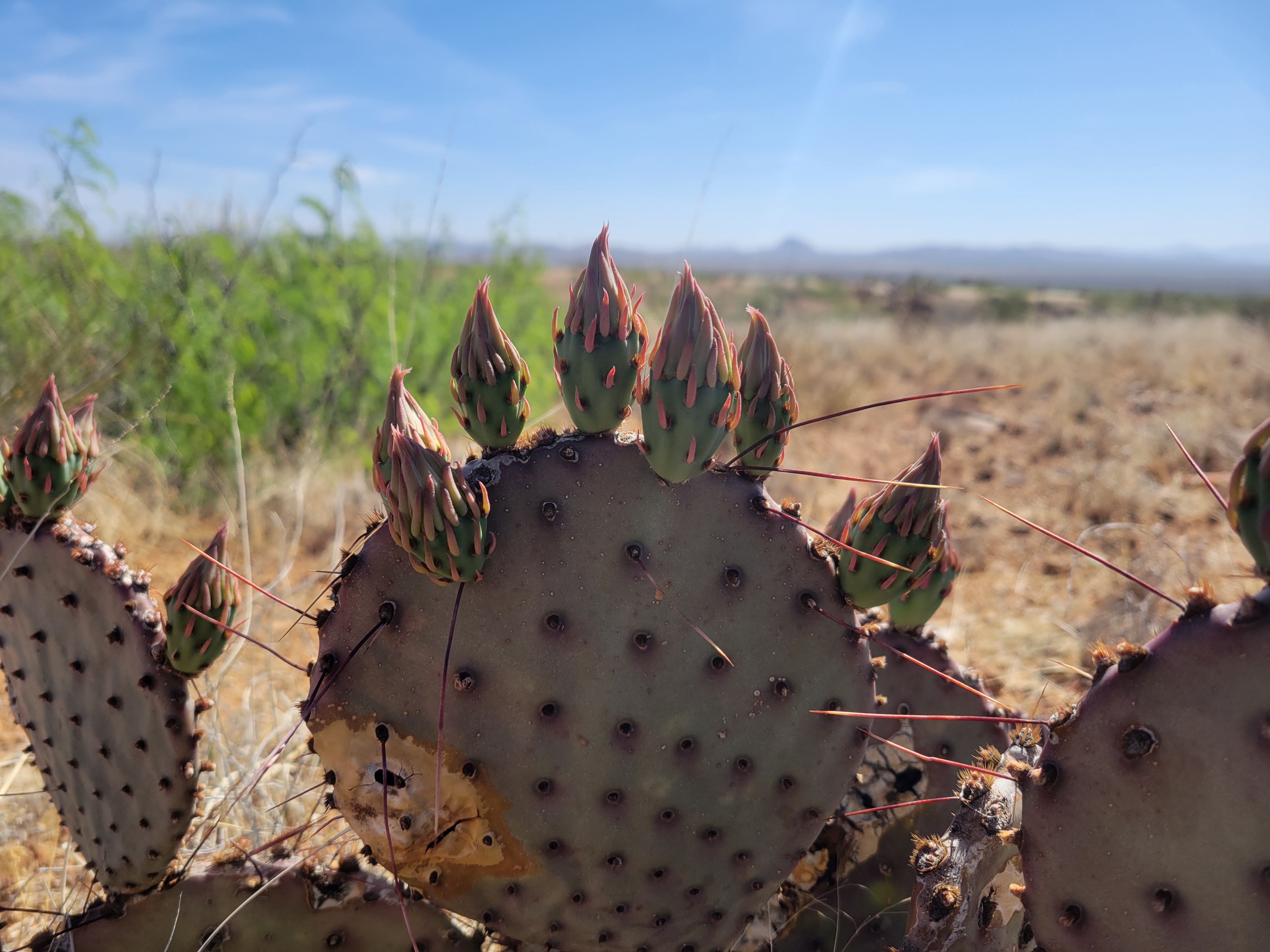
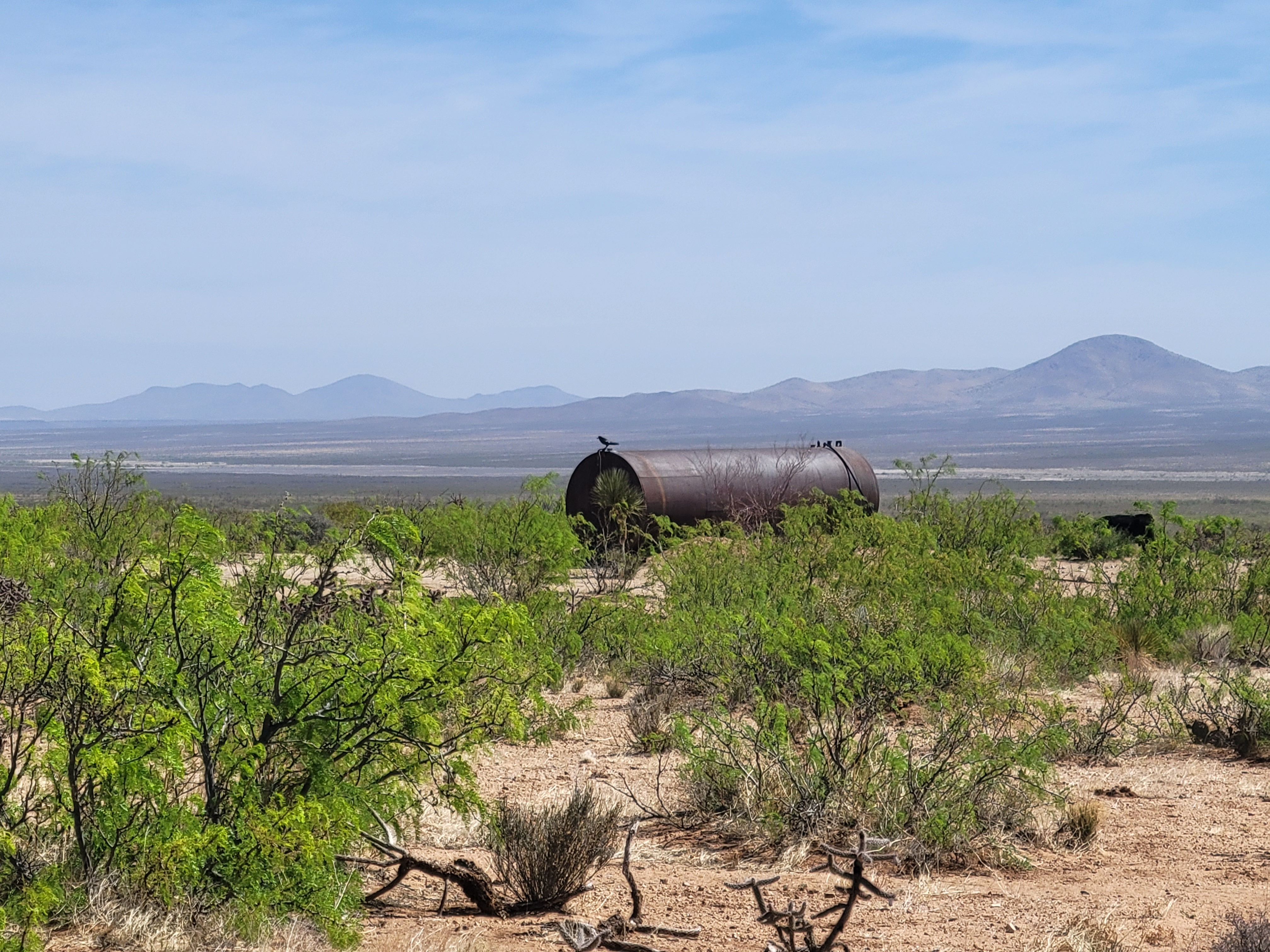
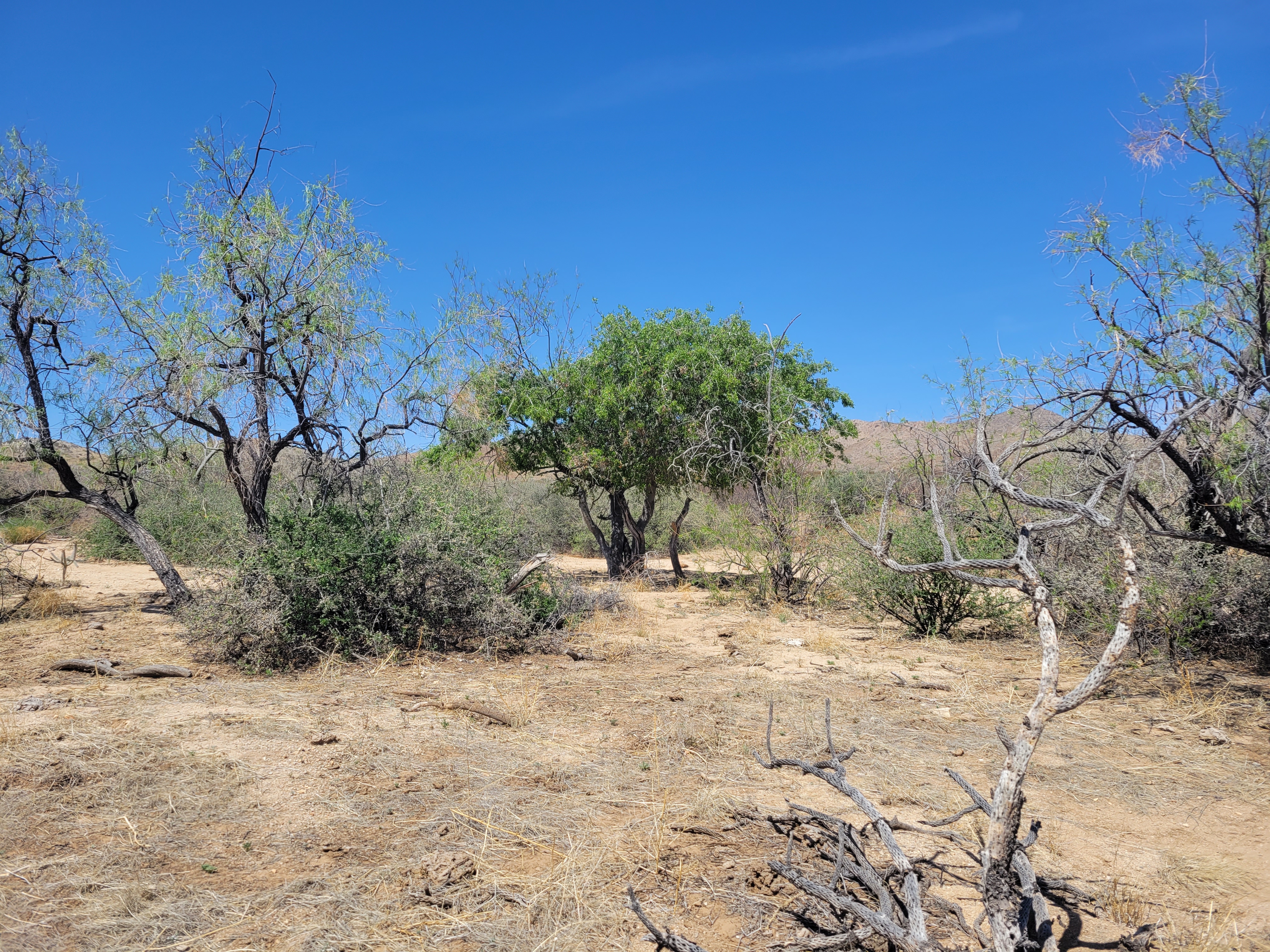
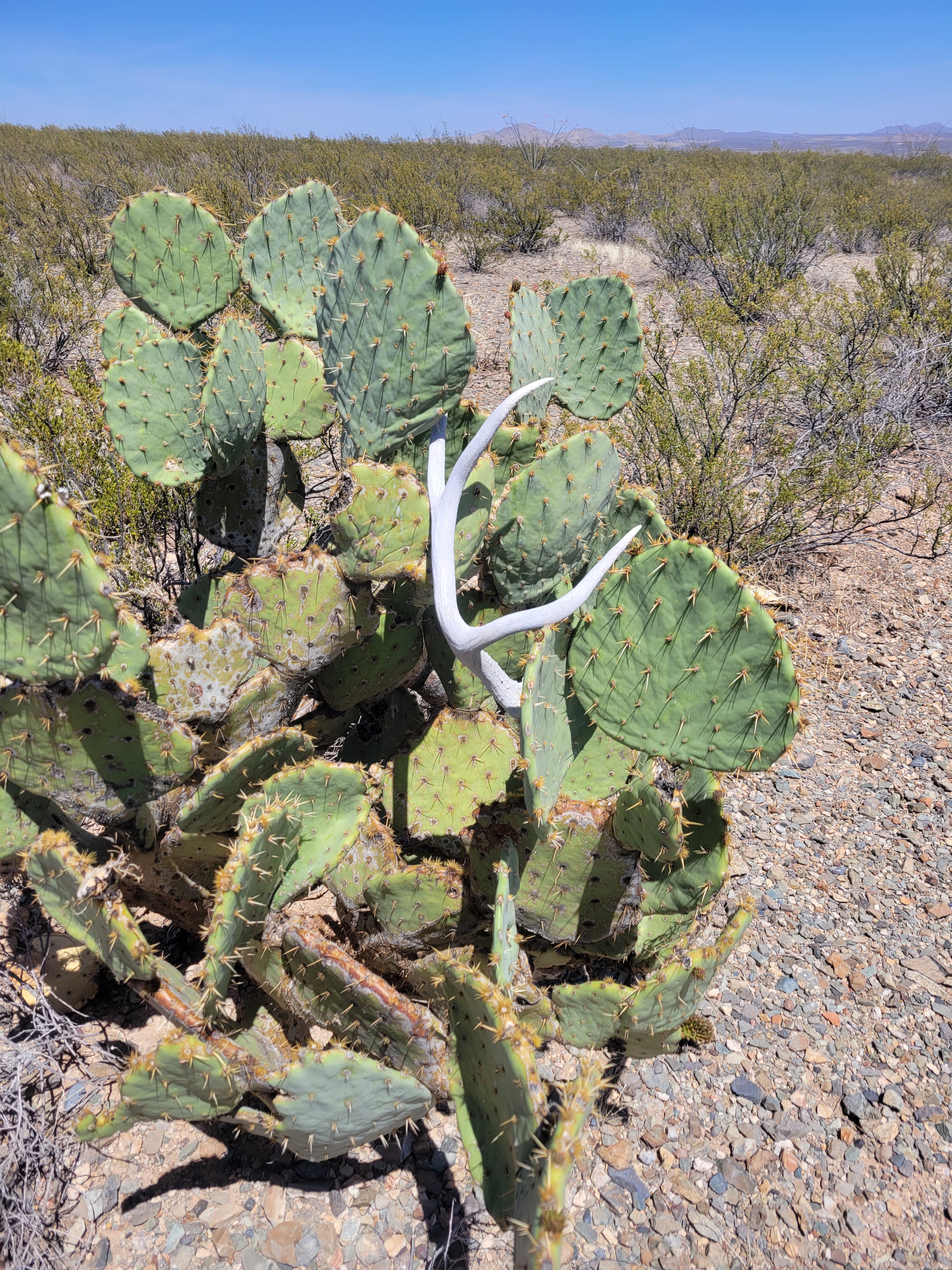
The morning air is full of chirping birds. Lizards are constantly running across the trail, and I’ve already seen one live snake (it was a bull snake, not a rattler). I’ve seen more cows than people in the last week (not because there haven’t been people, but because there have been a lot of cows). There have also been a lot of spiders and possibly some small tarantulas (I don’t know where the size line is between big spider and small tarantula), although I will spare you from any pics of those. There are scorpions, but I haven’t seen one yet.
The Landscape
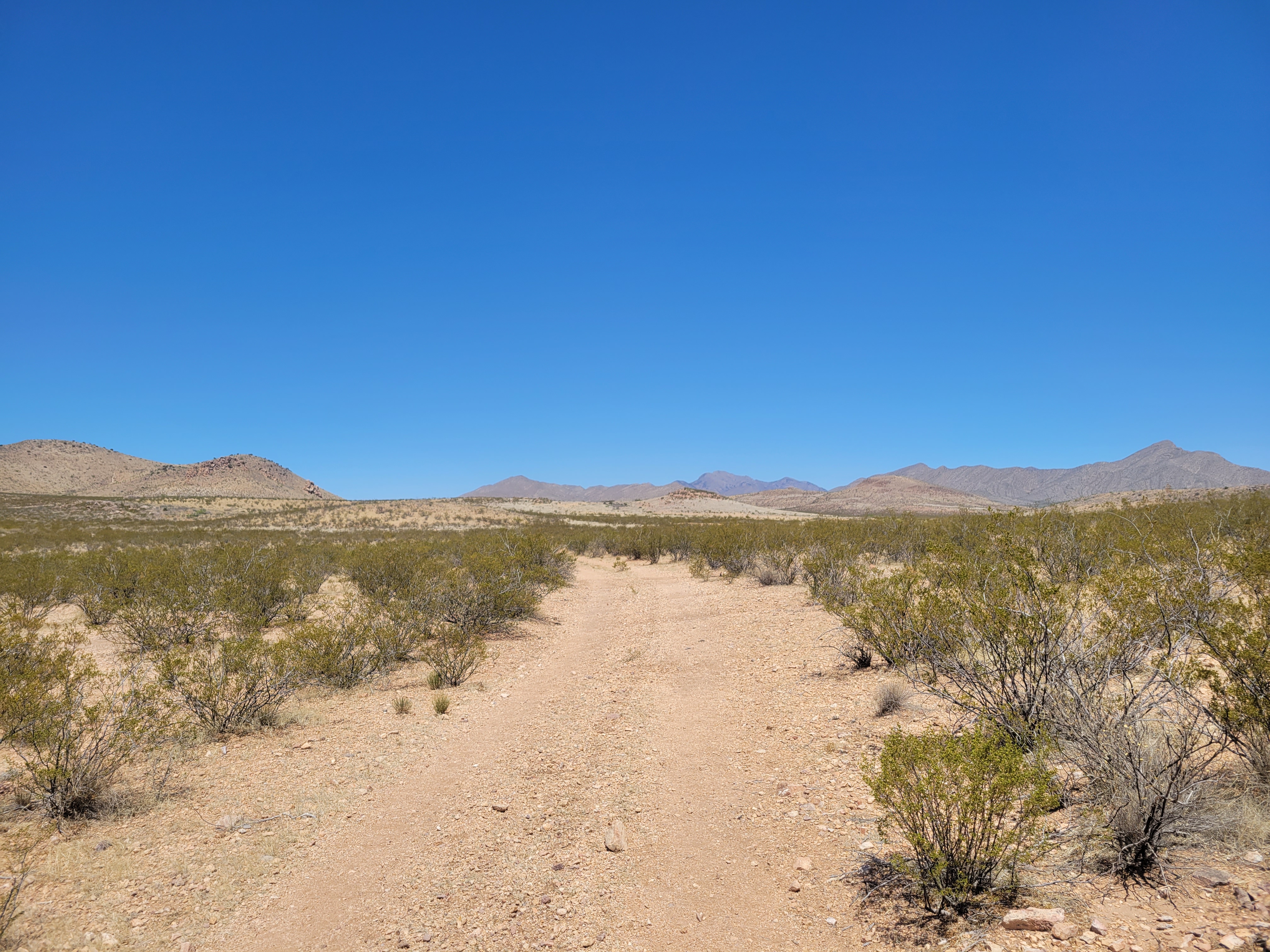
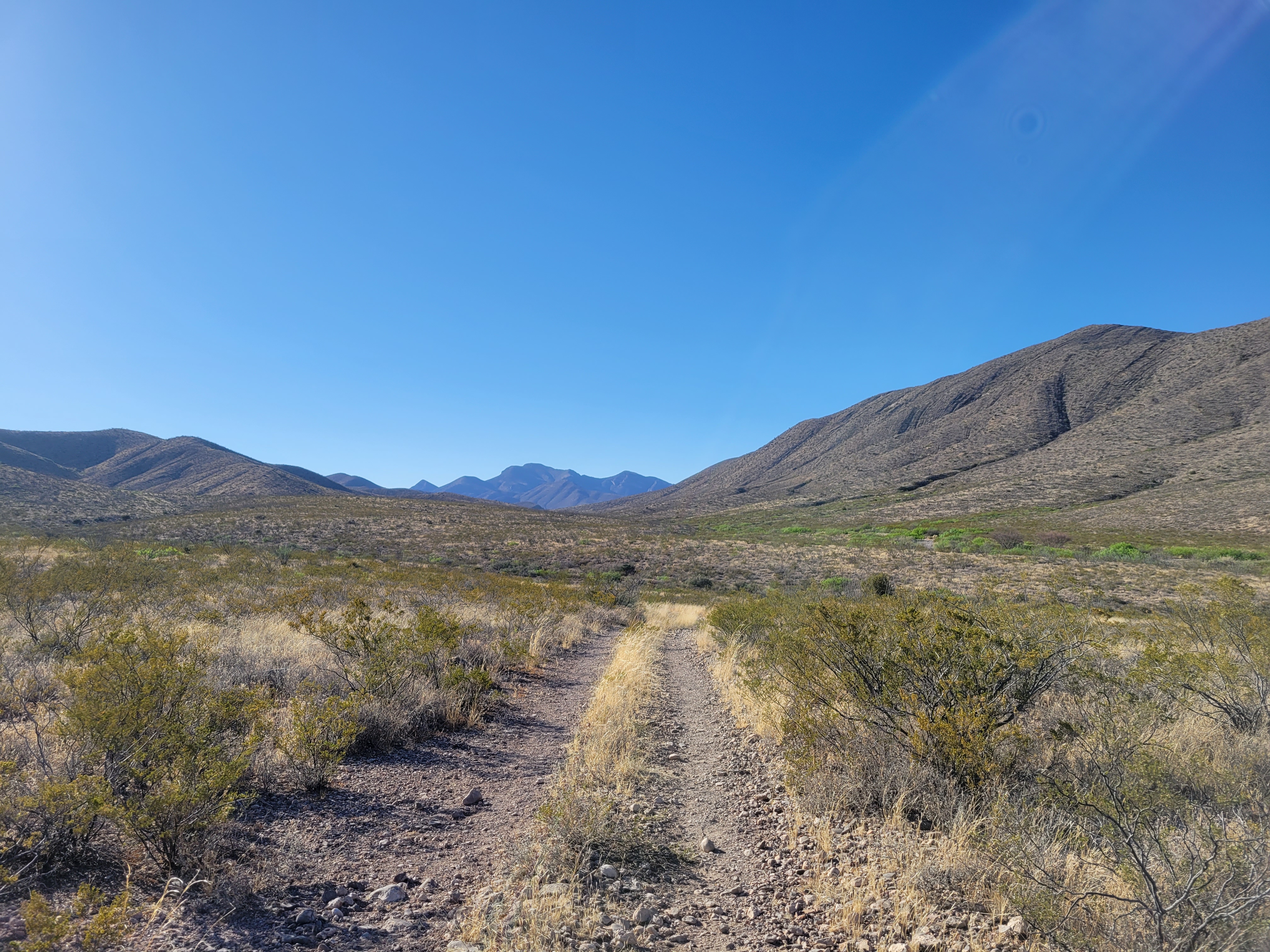
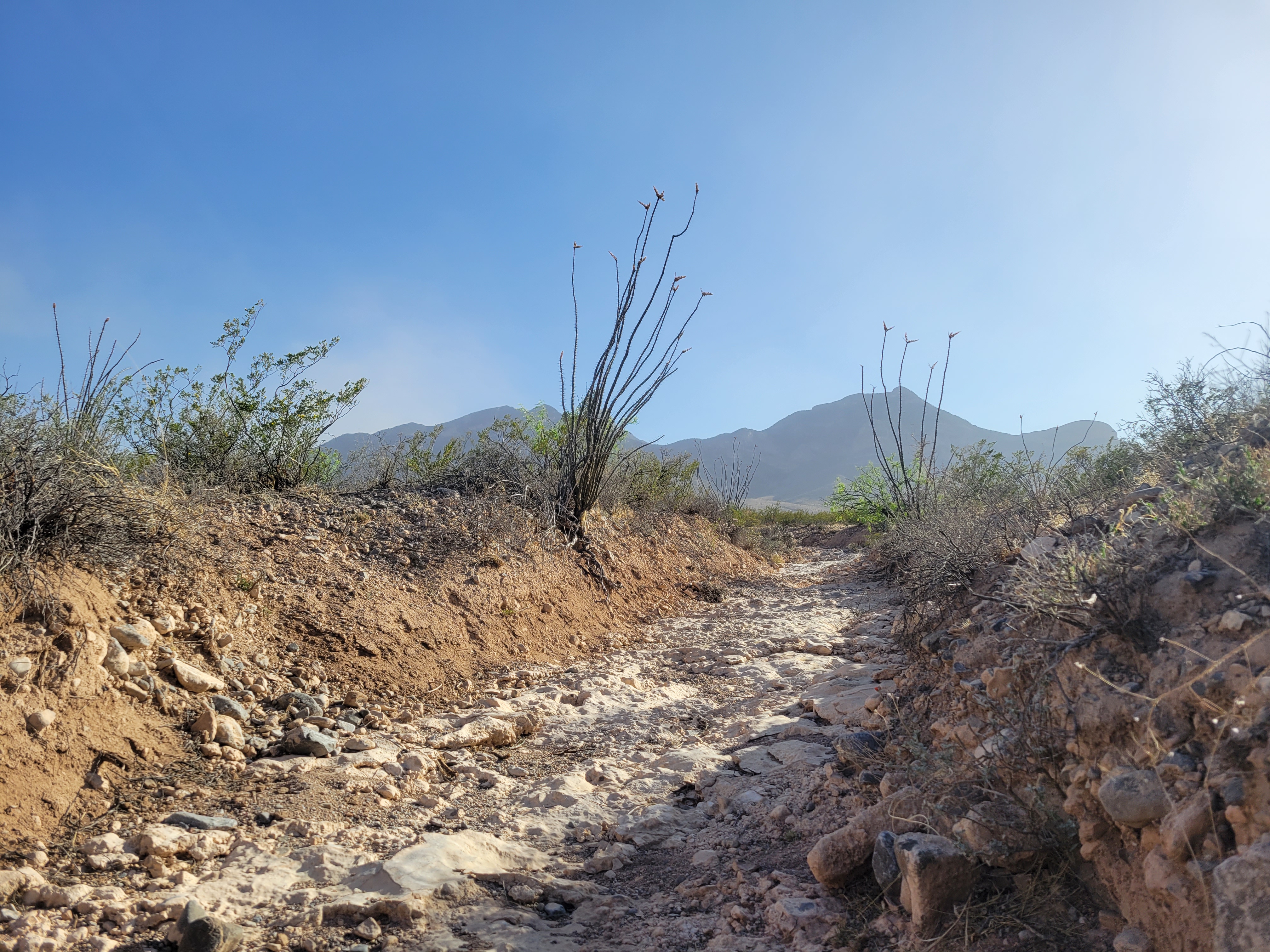
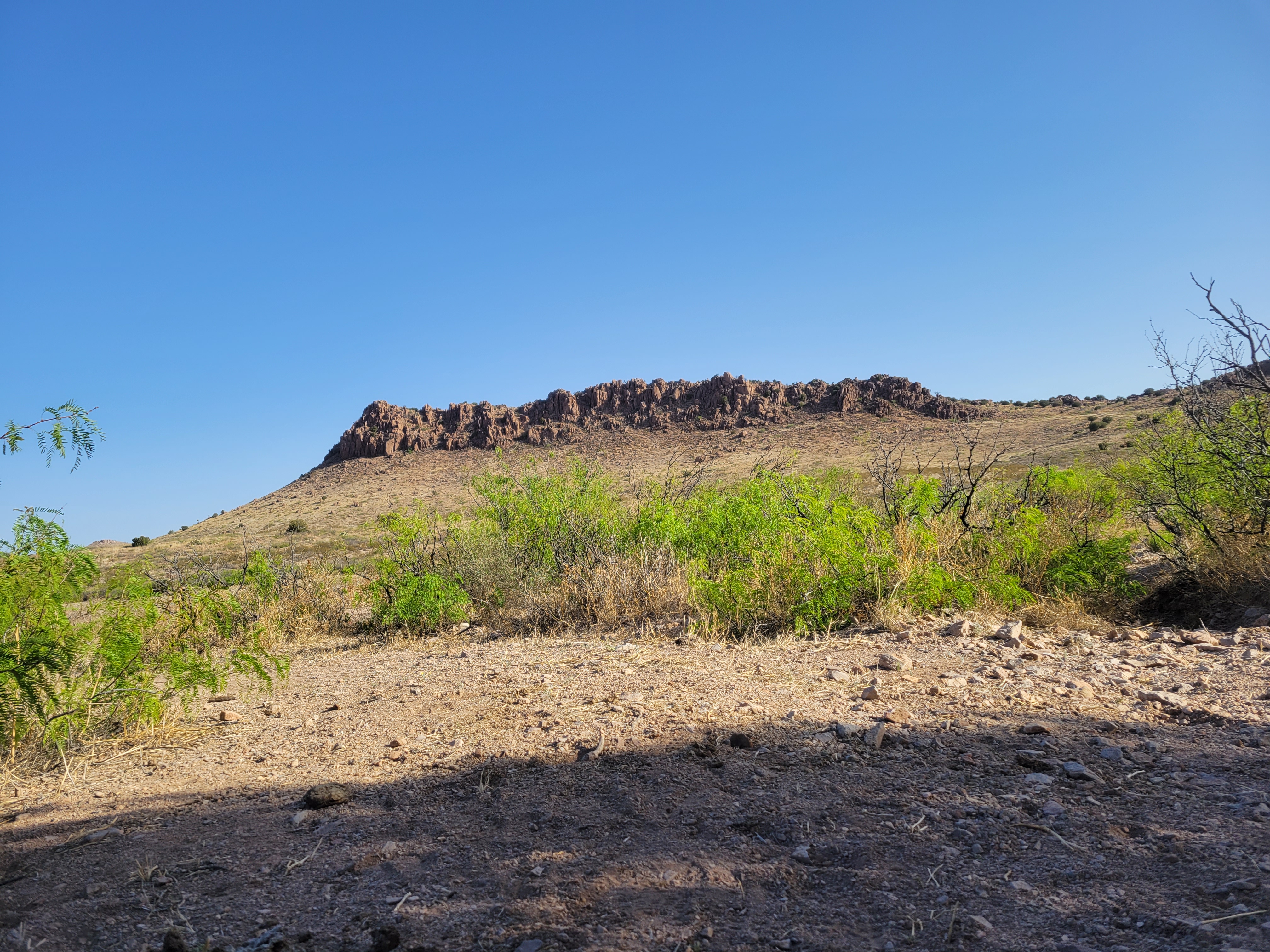
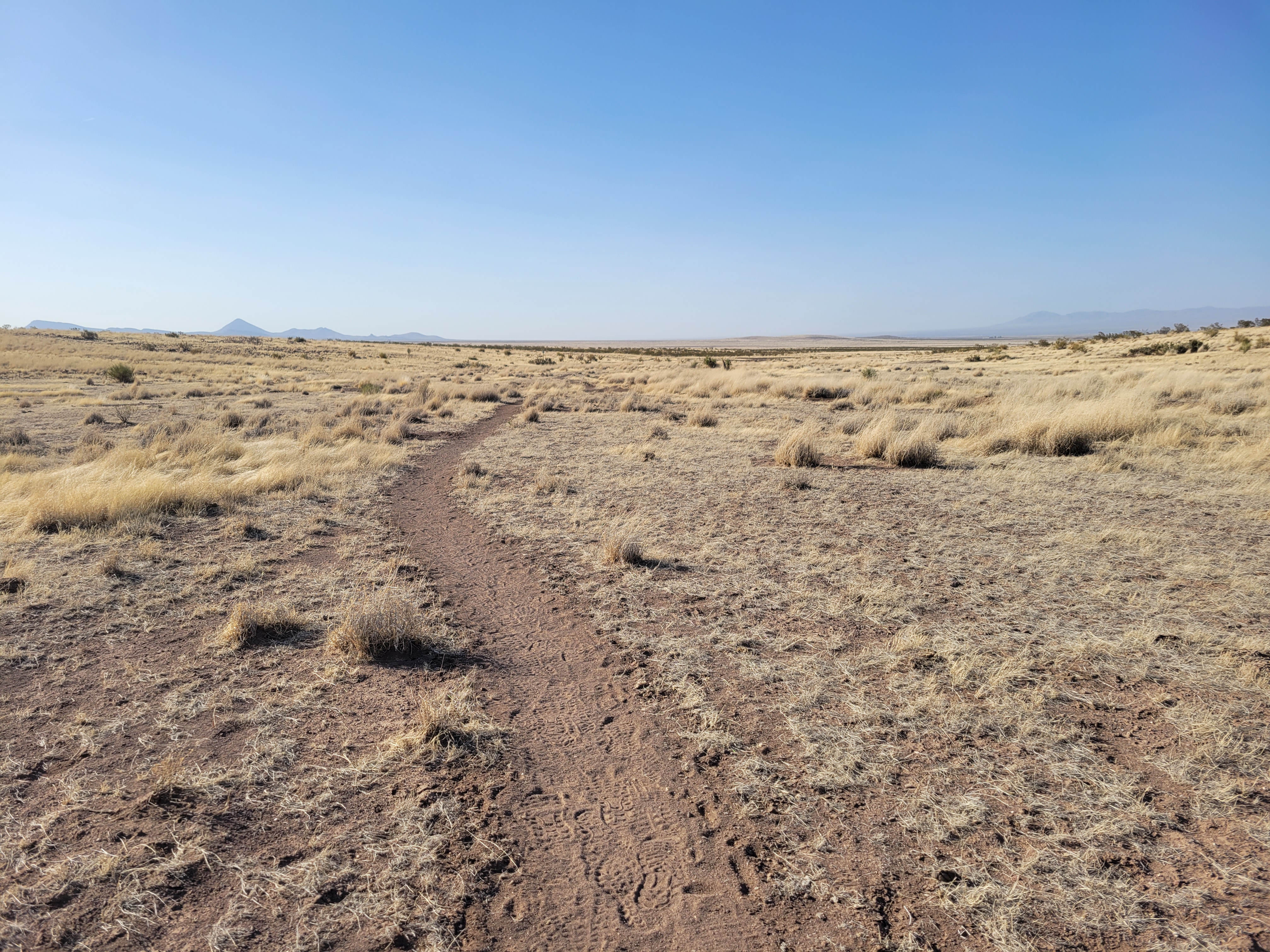
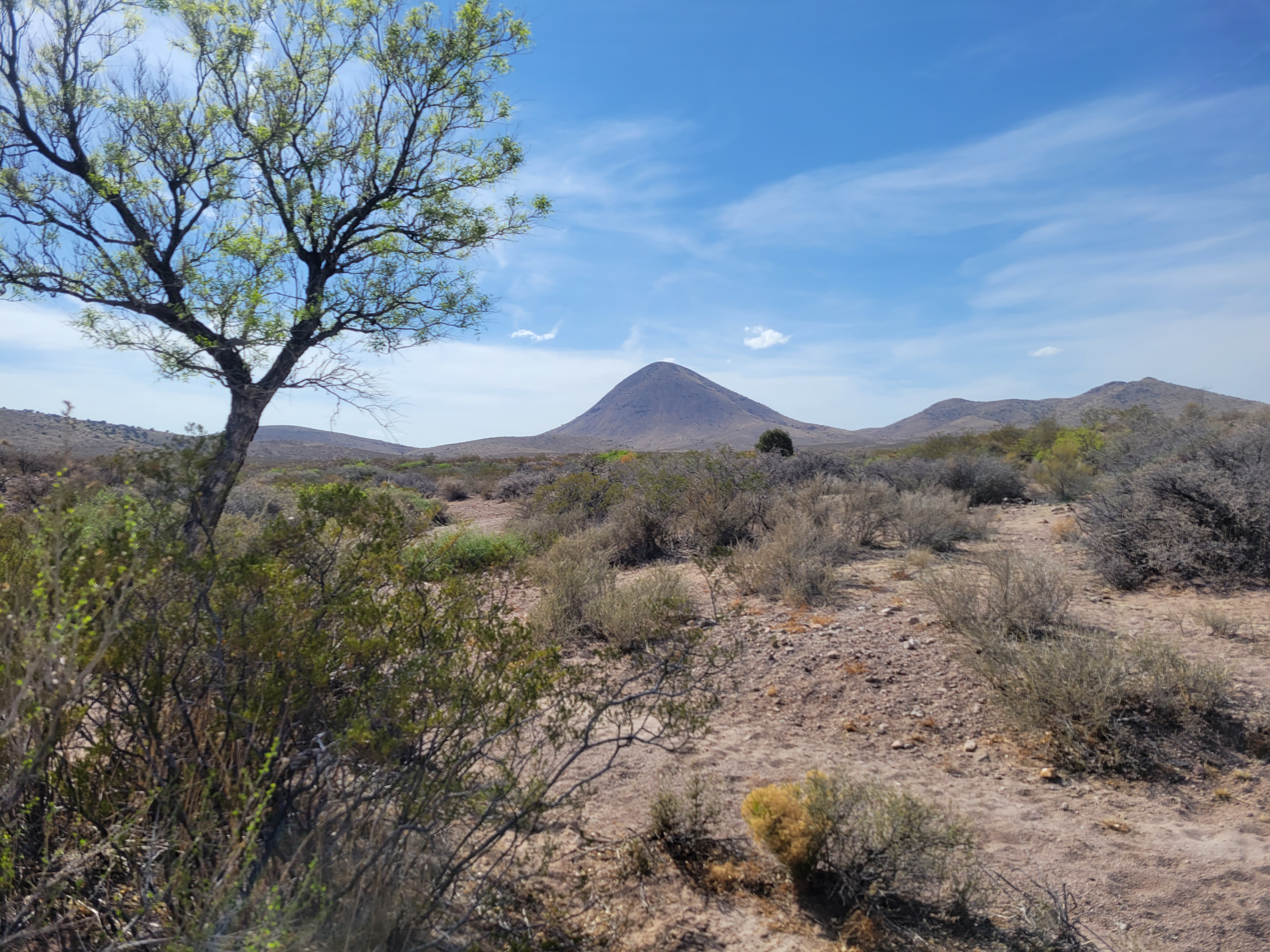
The terrain has been really varied. There are tons of washes and dried creek beds which either used to have water and don’t anymore, or only have water in the rainy season (rainy season is the late summer/early fall down here). I’ve gone through areas where it’s so flat that I can see for miles, but for the most part we’ve been walking along side and around hills and mountains. The trail went over some of the hills, but hasn’t taken us over any of the larger peaks. We’ve spent some time on roads and some of trail.
Sometimes, the route has just been marked by an occasional metal sign, with no discernable trail to follow. I meander around fence posts and try not to get too far off. Sometimes I can’t see the next fence post from the one I’m standing next to. I usually either guess and hope I see a post soon, or check GPS to see if the trail turns or goes straight. This route finding is easier at night, because the posts are reflective. I can often see 3 or 4 of them with my headlamp on full brightness. Which brings us to….
Night Hiking
It’s one of the best ways to conserve water when hiking in the desert. A lot of people have told me they’re freaked out by the idea of night hiking, and I can understand why. It’s natural for us to be afraid of what we can’t see. In the daytime here I have to be worried about heat exhaustion, rattlesnakes, getting lost, and running out of water. At night, I have to be worried about rattlesnakes and getting lost, but I consume way less water and it’s generally a really pleasant temperature for hiking.
My headlamp takes care of the rattlesnake concerns (watch where you put your feet). As far as avoiding getting lost, the protocol is the same as it is during the day: watch for signs and the trail. If you haven’t seen a sign in a while, check GPS. It’s sometimes harder to tell what is or isn’t trail in the dark and seeing things in the distance can be more difficult, but if navigation is an issue, I get as close to the trail as possible according to GPS and then make camp and figure it out in the morning (this has only happened once). Night hiking has been very peaceful. I haven’t heard a lot of strange noises, but generally if it’s going bump in the night, it’s another hiker (I’m not the only one who wants to beat the heat) or a cow. The key is not letting your brain take it any further than that.
The Water Situation
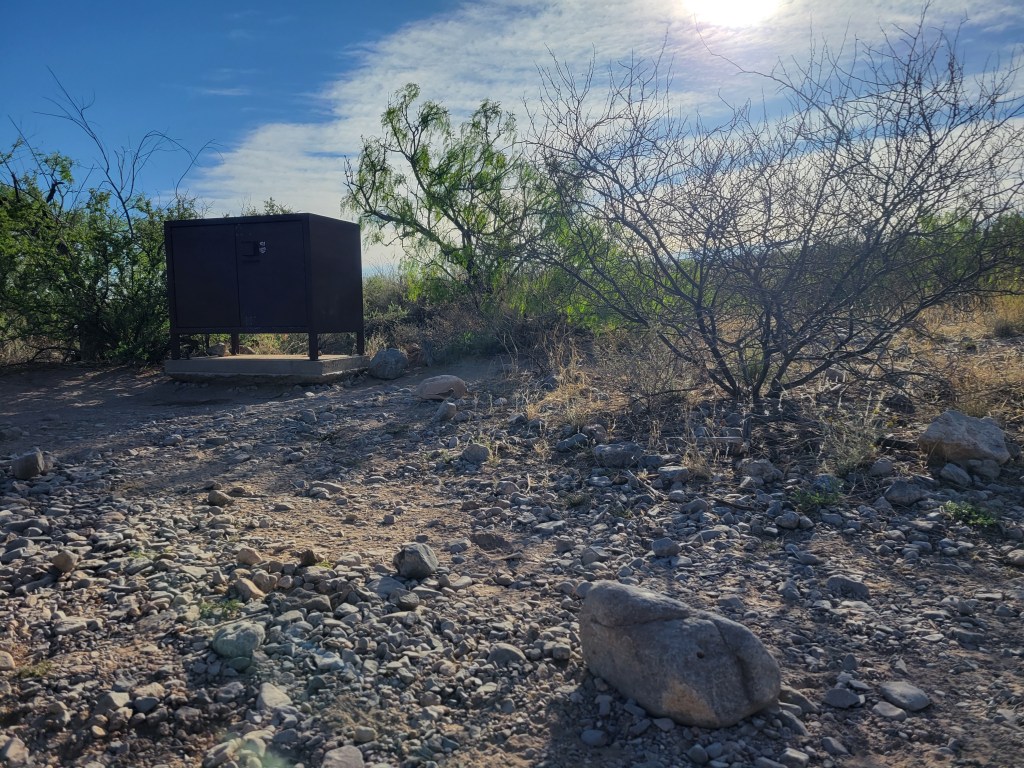
There are no natural above ground water sources in the first 84 miles of the CDT during the NOBO hiking season. The CDTC maintains 5 water caches between the border and Lordsburg. Farmers also allow us to drink from the sources they use to water their cattle. This includes reservoirs that provide water to cattle troughs, and the troughs themselves.
Are you saying you drink out of cattle troughs? Yep. I filter all the water I drink that isn’t coming from a source I know to be clean, and if cows also drink the water or if the tank is super gross, I also treat the water chemically to be extra safe. It tastes a little funky, but considering the landscape, I’m just grateful to have access to water at all.
The Elements
The desert is hot (shocker, I know). The UV index is basically always as high as it can get during the day. The sun will eat you alive. It’s also cold at night: it’s dropped into the low 40s several of the nights since I’ve been here. Prime hiking hours right now (apart from the night) are sunrise to about 11:30am, and then 5pm to sunset. People do hike during the afternoon and I have, but it’s generally smarter and easier to find shade and take a nap. Even when it’s not that hot (we had 2 days where the high was in the low 70s and it was glorious), the UV will still fry you alive and make it feel really hot out.
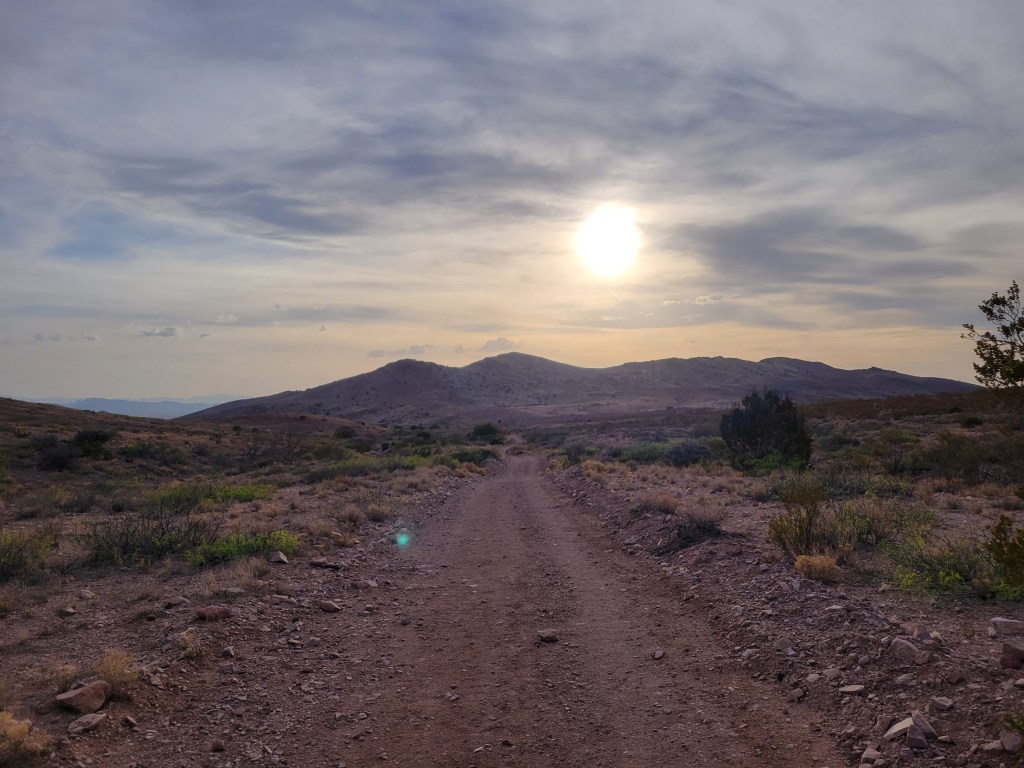
The wind is intense. There’s not much to break it, so we’ve had several days with 20-30mph sustained winds and gusts up to 40-50mph. It’s ripped out my tent stakes on several occasions and has made some of the mornings brutally cold. The desert is a land of extremes, and it does not care about us. Still there is so much about it that is wonderous.
The Shade Situation
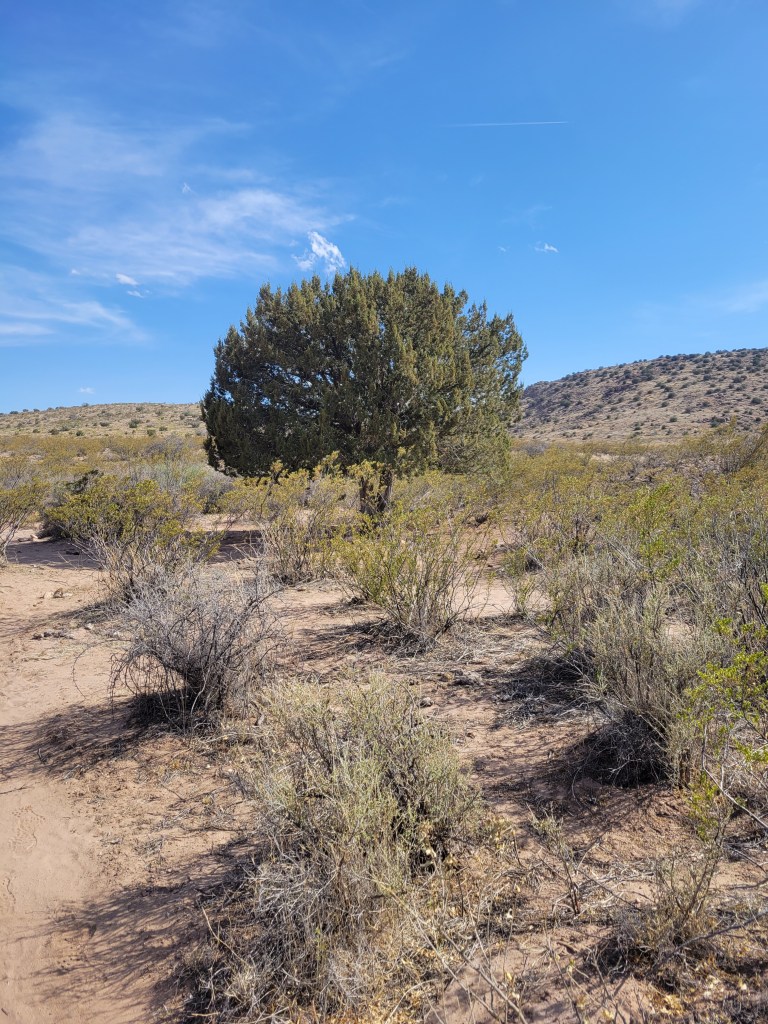
Find me a shade tree and I’ll find you a hiker. Shade is not easy to find around here, although I have generally found it when I’ve needed it. There was one 15ish mile section between Hachita and Lordsburg with absolutely no shade other than a shelter provided by an incredible trail angel (a man named Apple who brings cold drinks and a shelter out into the desert and hangs out with hikers all day. It was truly amazing to hang out with him and the other hikers, and it made my week), but otherwise I’ve generally been able to find a spot to hunker down in the heat of the day. The key has been flexibility: being willing to stop a little earlier than I wanted to, or to hike a little into the heat of the day, or to hike a little off trail.
 Marin on the CDT