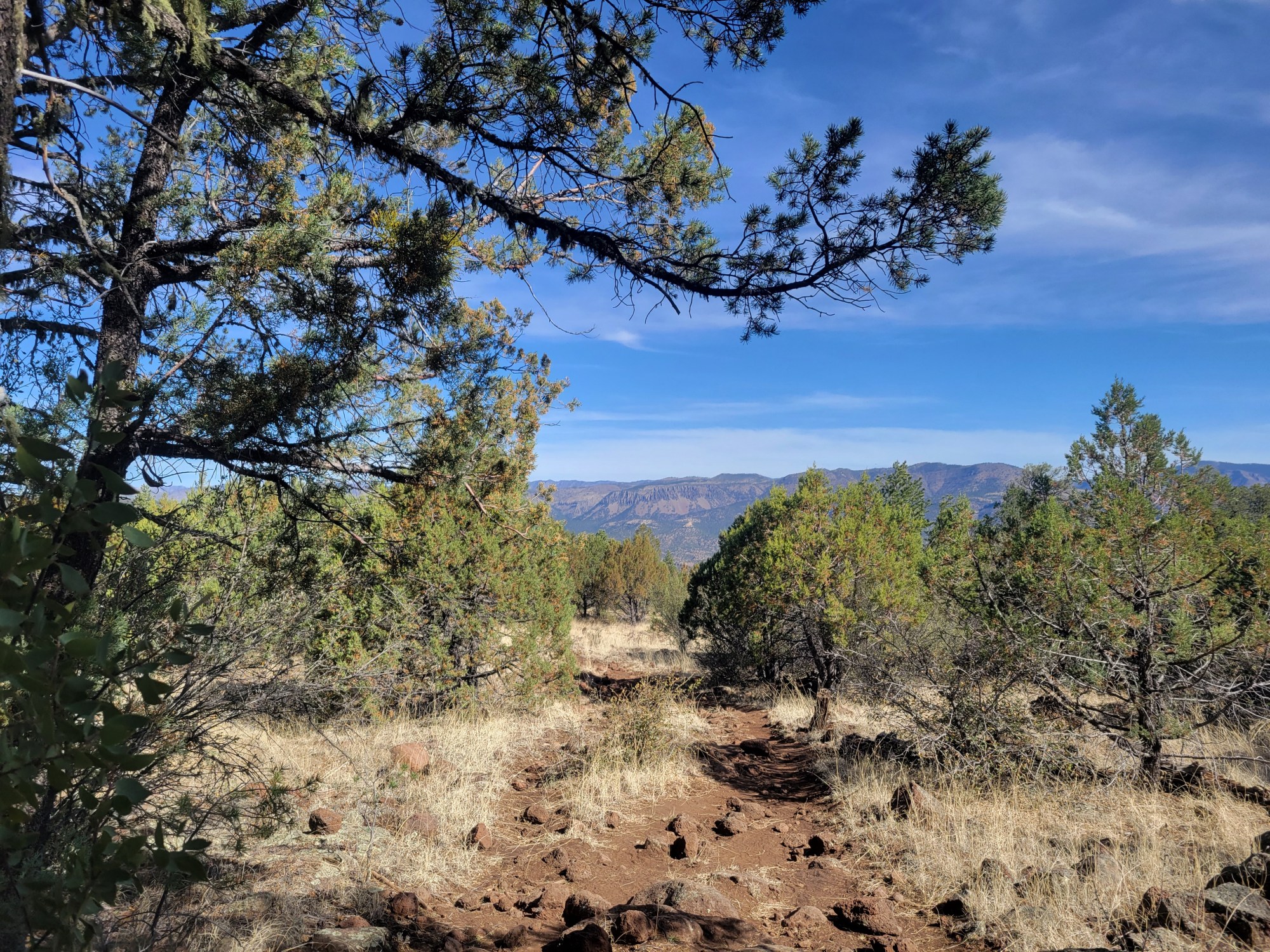
On the stolen lands of the Chiricahua Apache and Pueblos peoples.
Note: This post is very delayed. I got off trail on 5/11/22 after getting giardiasis and am back in Ohio for the time being. If you missed the announcement, you can read it here. I almost definitely picked up the giardia somewhere in this section, although I’m not sure which source I got it from.
Note: Mileage numbers reset near the beginning of this section because I, like almost all CDT hikers, took the Gila River Alternate instead of the CDNST through this section. The Gila River Alternate cuts off the section of the CDNST that goes through the Black Range. While both routes are supposed to be stunning (I can’t speak for the Black Range but the alternate was unbelievably beautiful), there are few if any reliable water sources through the entire CDNST section in the Black Range. The alternate follows the Gila River and provided us with more water than we knew what to do with. The second mileage number is for the alternate, not for the CDT. Check the table at the bottom for the total number of miles I’ve hiked.
Day 13: 0 Miles
Day 13 was my first zero*. I spent most of it hanging out at the hostel with other hikers, calling home, and organizing my resupply. I took care of a problematic blister that had been worsened by the asphalt road walk and otherwise rested. It was a good day.
Day 14: 11.2 Miles
Time flows differently on trail, and it felt like I’d been out there a lot longer than two weeks. It wasn’t that time had dragged, it was that I had managed to cram so much into the days. I had walked more than 150 miles, had crossed through desert, forests, walked around and over mountains, had felt the earth, steady underneath me, with each step.
I packed my things in the morning, drank coffee with some other hikers, did some minor gear repairs, and got moving. I headed for the Little Walnut Alternate, a short-ish road walk that cut off about 5 miles of the CDNST. The coffee turned out to be a questionable life choice; the worst part about asphalt road walking is that it tends to be really hard to find a place to pee. I did end up finding a spot eventually.
I stopped to talk to Tim, a local who was originally from Ohio. I ended up taking a break with him in the shade provided by his garage. He is also a backpacker, so we mostly talked about gear, and it was a lovely stop.
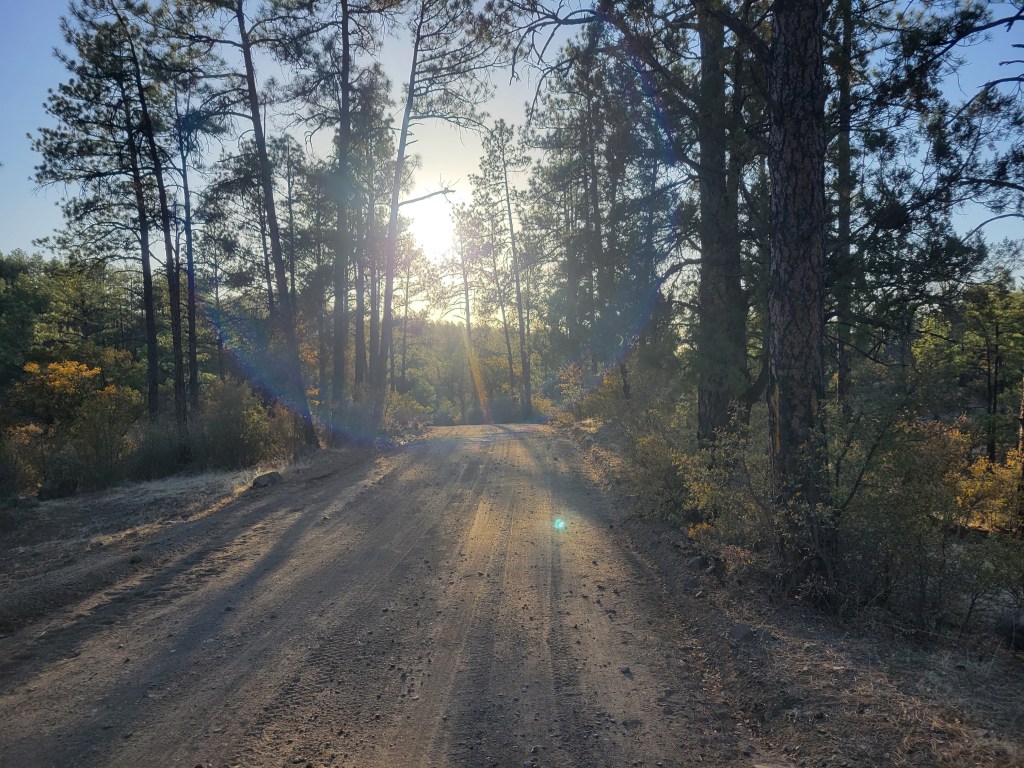
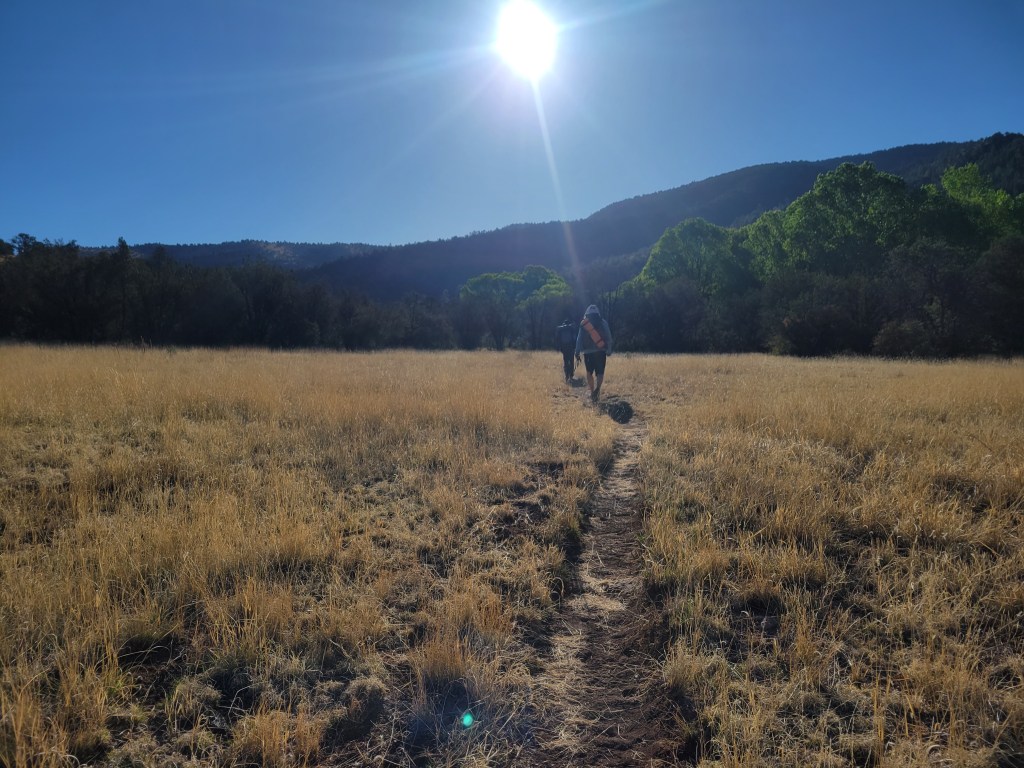
The asphalt road turned to dirt and the Little Walnut Alternate took me back into the Gila National Forest and to the beginning of the Gila River Alternate. The Gila River Alternate continued on a dirt road and I enjoyed the scenery as I got back into the woods. There were so many huge pines, the sun was shining but it wasn’t oppressively bright, and the sunset was lovely. I followed the dirt road until a little after dark and then found a good place to camp.
Day 15: 12.9 Miles
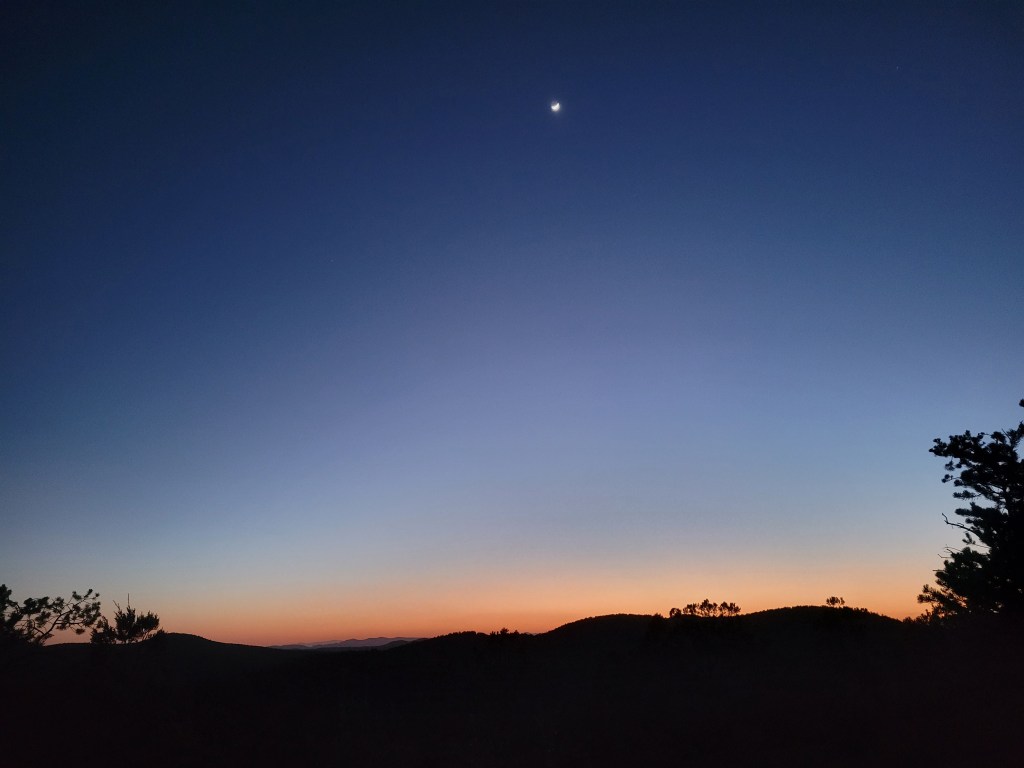
I had a pretty normal (normal for out there, at least) morning: I woke up before the sun rose, packed up, and walked. The dirt road got less even and I started to see more elevation change. I was hoping to get up and over a saddle that would involve a 1500′ ascent and similar descent, and camp relatively near Sapillo Creek that night. It would’ve made for a long day, but I needed to start pushing my mileage. I knew I was probably going to have to stop night hiking once I hit the Gila River due to how cold it was getting after dark, which meant that I was going to have to get comfortable hiking during the heat of the day. I was frustrated with my low mileage the day before.
I met a group of other hikers; Simple, Dogbite, Plus One, and Mr. Freeze; and walked with them for a lot of the morning. It was nice to have that connection, especially as I was missing hanging out with the other hikers at the hostel. They got ahead of me when I took a break.
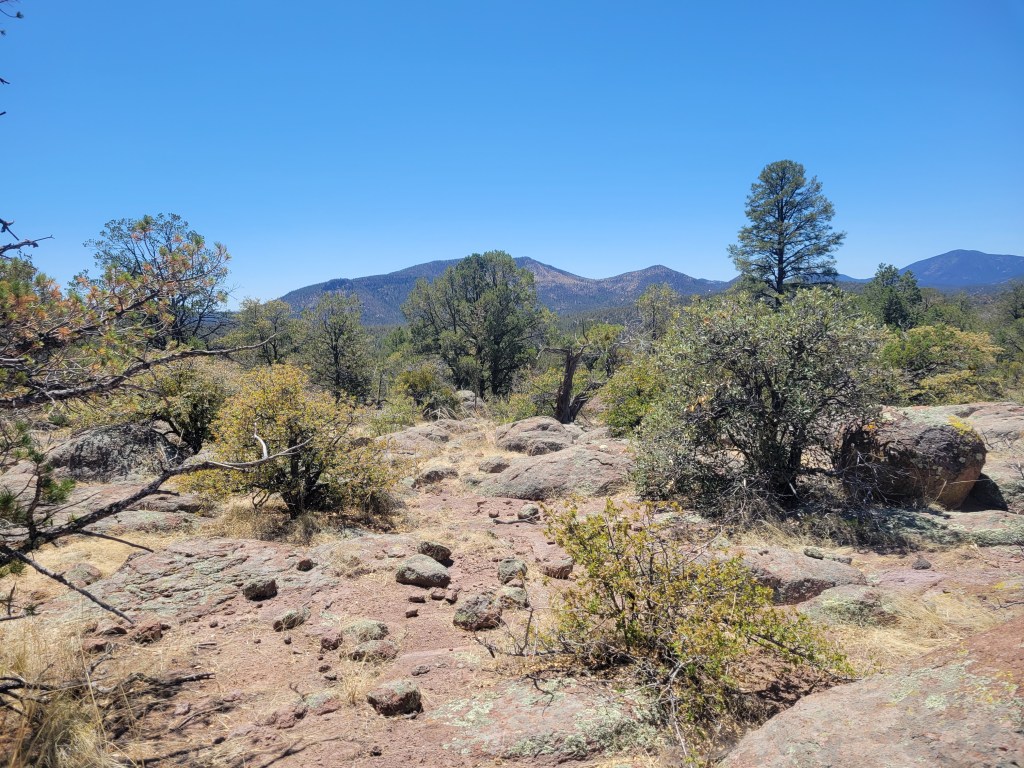
After lunch, water sources started to get more plentiful. I was behind from where I’d hoped to be and was discouraged. In the late afternoon, I bumped my head on a downed tree. It was not a hard knock, and did no worse than force me to accidentally bite my tongue. Five minutes later the pain was entirely gone and the only reason I knew I’d hit my head was that I remembered hitting my head. Still, it provided a practical lesson and a reminder. The lesson was this: take your sunhat off before ducking under anything that’s close to head height. I’d seen the tree but hadn’t ducked enough, and the brim of my hat had obscured it from view. I was reminded of my own physical vulnerability. I was my own and my only mode of transportation. We are fragile, us humans, and I do deeply value this life. I found myself deeply afraid of losing it in those woods. Still, I pushed onward and began the ascent to the saddle, knowing that I wouldn’t make it to Sapillo before dark.
Thru-hiking (and backpacking, for that matter) is not a zero-sum game. If all I cared about was reaching the Canadian border, catching two planes, a bus, and a pick-up truck to the Mexican border and then walking would be a terribly inefficient way to do it. The Canadian border is also a relatively arbitrary stopping point. The trail technically continues for another 700ish miles afterwards (as the Great Divide Trail in Canada). It’s not about the finish line, it’s about the walking. I was (and am) still getting comfortable with having days where I don’t meet or exceed my mileage goals. Sometimes the terrain is harder than I expect it to be. Sometimes I have to stop for a lot more breaks than I wanted to because none of the things I need to take care of do me the favor of lining up conveniently with each other. Sometimes I have to baby a particular joint or blister and it slows me down. I felt pressure (from myself) to move faster and fear that I would be really slow through the Gila River section, and I let myself be somewhat consumed by those worries. The pressure I felt was unnecessary and slowed me down.
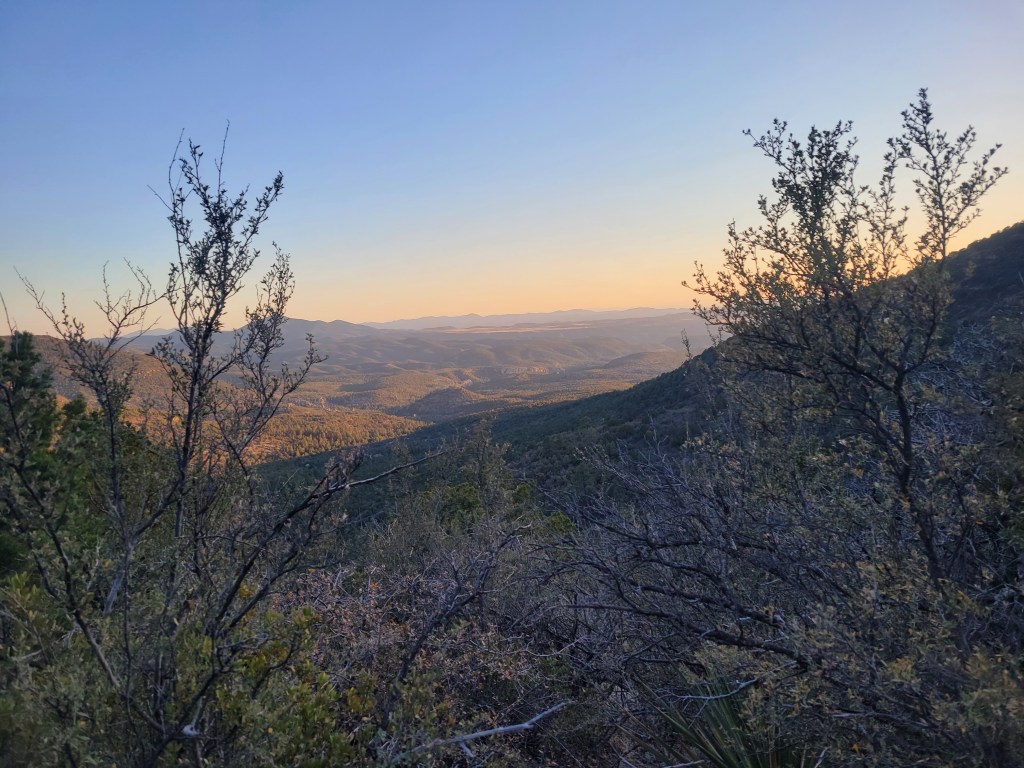
About halfway up the climb to the saddle, still discouraged, I took a break. I dug around in my backpack and pulled out three lists that I’d written two weeks earlier while I was hanging out at the airport in Tucson. The lists were these: why I was thru-hiking, what I hoped to accomplish with a thru-hike, and what would happen if I quit. A reminder of the answer to the why are you here? provided the motivation I needed to continue, and quieted much of the fear that permeated my brain-space. The difficulty of the hike was one of the biggest reasons why it was worth doing at all. So it’s hard. What are you gonna do about it?
I was gonna hike. I made it to the top of the saddle about half an hour before dusk and took a quick break for dinner. I started the descent, found a good, relatively poison ivy free place to camp, and went to bed.
Day 16: 16.2 Miles
The morning brought with it a rough descent, one I was glad I hadn’t tried to do in the dark. The trail switchbacked down the mountain but was still incredibly steep. I got to Sapillo Creek and took a moment to filter water, clean my feet off, and regroup. Sapillo was the point at which the descent was finished and I was in the canyon. To the right of me, a wall towered far over my head. I began the walk into the canyon, approaching an area with huge walls on either side and hearing the sound of water moving in the distance. It was something out of a fairytale, too vast and incredible to possibly be real. I stopped for lunch with a group of hikers, all of us marveling at the beauty of the canyon. We were all excited for the break from the long water carries and for the massive change in terrain.
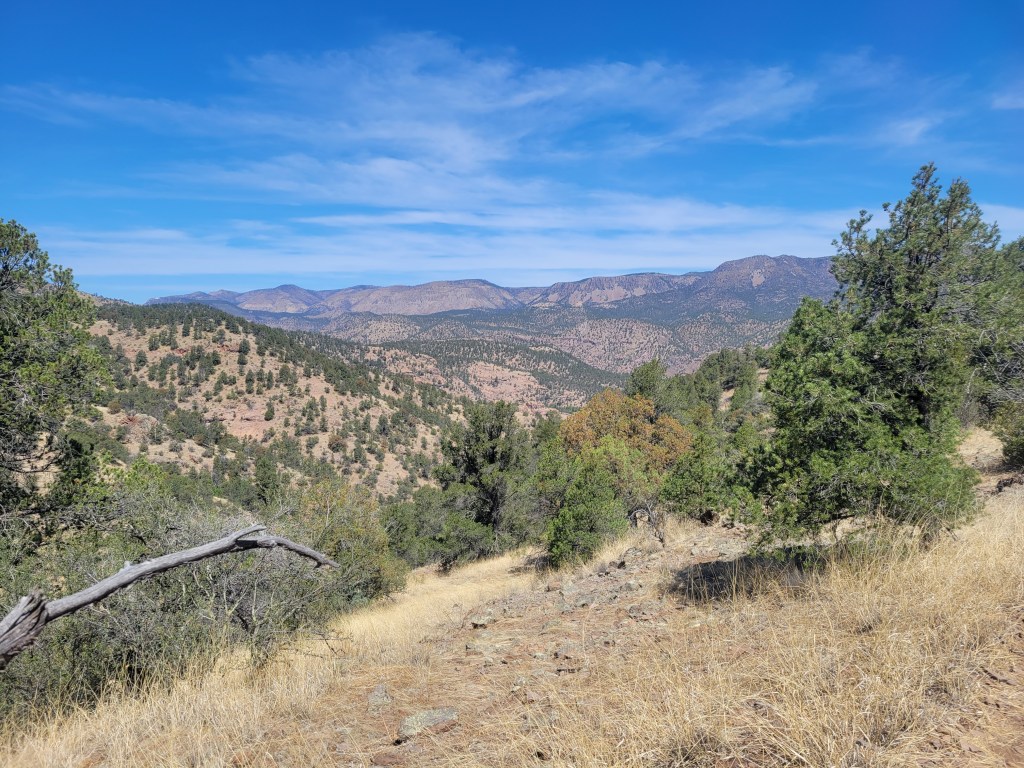
I watched some of the other hikers go through it before packing up my stuff. It was thigh high on them, which I knew meant it was going to be almost waist high on me. I moved things around in my pack to make sure that water-sensitive items were all protected and made for the first Gila River crossing.
It was, in fact, waist deep on me, and I couldn’t see the bottom. The Gila River is slow moving compared to the rivers in the Sierras on the PCT or the San Juans that were to come, but it still has a current. I did not have experience with river crossings. It was part of the research I’d done before leaving and I was aware of all the general safety tips, but I hadn’t put them into practice before. I wasn’t close to getting pushed over, but the strength of the current really humbled me. I’m supposed to do this 200 times? What about the ones that are worse than this one? I was cursing myself for not having linked up with a group and I was worried about what was to come. All the hikers I’d eaten lunch with were ahead of me, I’d been the last to leave. I felt vulnerable again, as I had after bumping into the tree the day before.
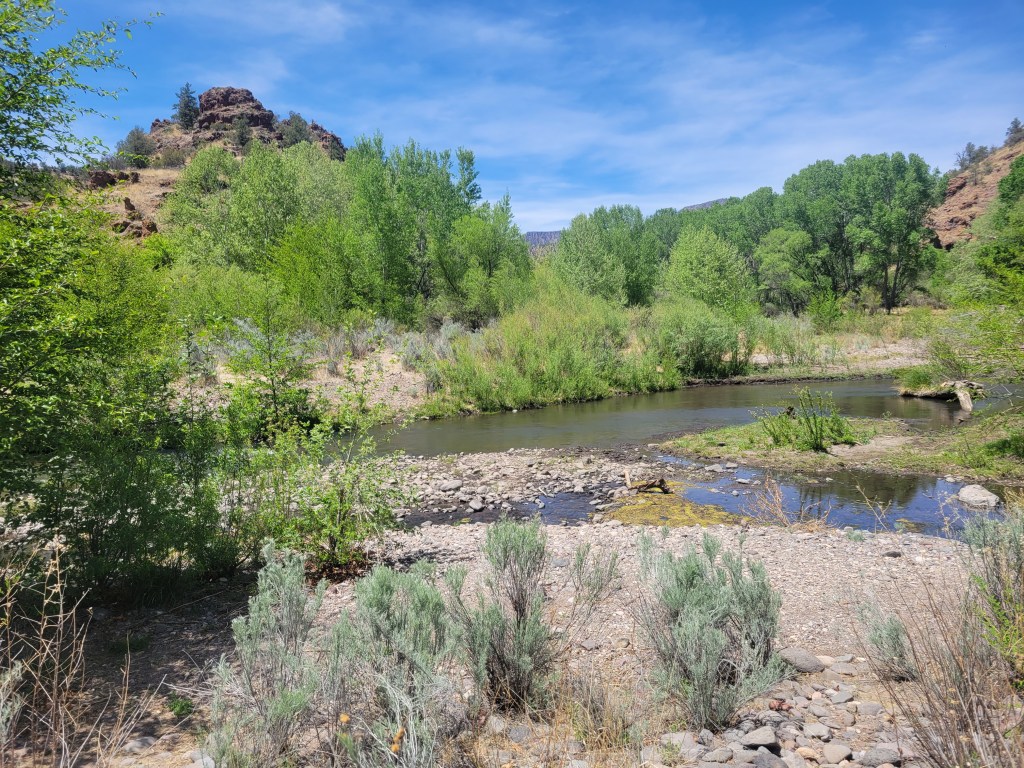
I kept going and the next river crossings were less intimidating but I quickly lost the trail. It really didn’t matter all that much, there were canyon walls on both sides blocking me from veering far from the creek and the trail followed the creek north for the next 70ish miles. I could also see that I was relatively close to the trail on FarOut (GPS). This section was the easiest of those I completed to lose the trail in, and the hardest to get actually lost in. When in doubt, head upstream. I kept walking and eventually ran into Cricket and Why Not?, two hikers who I’d eaten lunch with. They’d also gotten off trail and had done a bunch of extra walking. I joined them, glad to know that someone would notice if I fell down in the river. I wondered if I was too inexperienced for this trail, if coming out had been a huge mistake.
One rule that I set for myself prior to starting the hike was that I was not allowed to quit without double-zeroing in a town first and calling the people who might be capable of changing my mind. I thought about what quitting would look like for me. I felt overwhelmed and afraid, and I didn’t want to do it anymore. I’d bit off more than I could chew. We’ve all done it. I was going to follow my rule, but I was pretty sure I was going to quit at Doc Campbell’s and come home.
We stopped after a while and took a fifteen minute break. I ate a snack. I did more crossings with Cricket and Why Not?, watching how Cricket moved when he crossed. He’d done the PCT and crossed the river confidently. I slowed down during crossings, careful to make sure that I had three points of solid contact with the riverbed before stepping (one foot, two poles). The crossings were largely thigh to waist height on me, but I got much more comfortable with them. I had the urge in the beginning to try to speed through the crossings to get out of the water, but that had been my mistake. If you take them slowly and focus on each point of contact, it’s much easier to take secure steps.
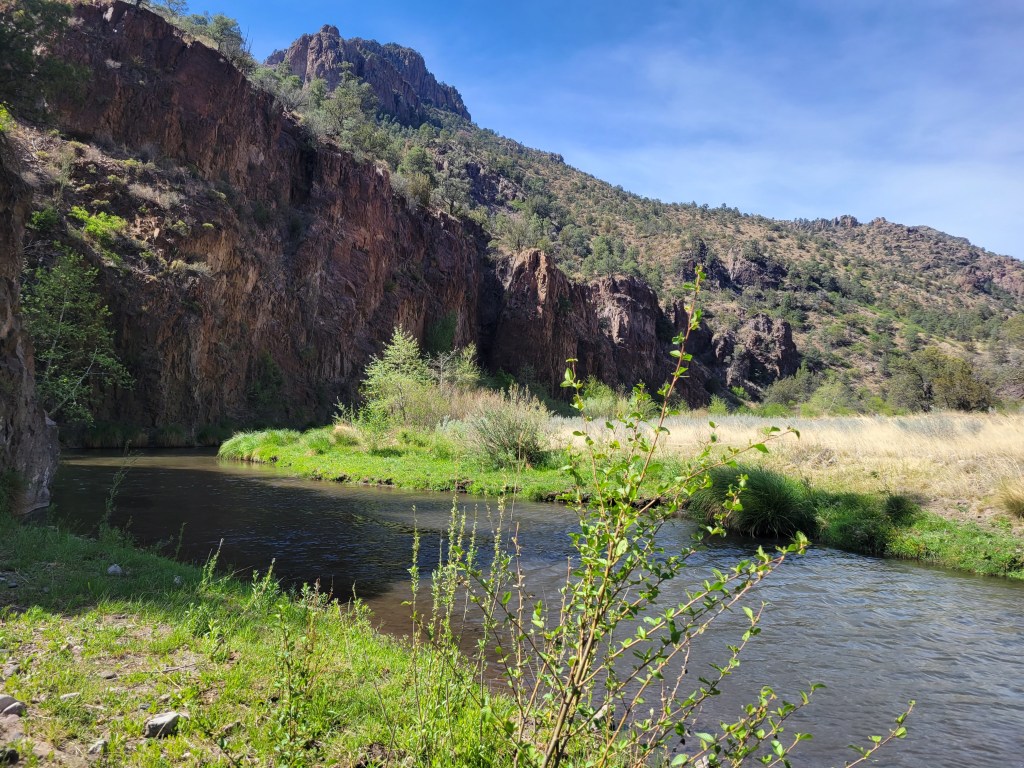
About twenty minutes after the break we took, a realization hit me: Why would I leave this? I looked up at the canyon walls and was struck again by the beauty of all of it. So it’s hard. It’s a once in a lifetime opportunity and it’s incredible. Why would you ever go home? I got a second wind and an attitude adjustment, and hiking got a lot easier. A second realization, a little while later: Ohhhh, you were hangry. One of the best things about backpacking is that you can’t quit whenever you want. You can announce to the universe and everyone in it that you’re quitting, but like it or not, you still have to walk to town (as it would turn out, this is a double edged sword if you actually need to get off trail for some reason, i.e. giardia). It gives you plenty of time to eat and sleep and figure out if your brain was just being a petulant toddler because it needed a snack or a nap.
We made it to a spot where several other hikers (the ones we’d eaten lunch with) had already set up camp. I found a good spot near them and we all ate dinner together. We talked about gear, poison ivy, river crossings, and our wet feet. It was a good night. I was decidedly not going to quit at Doc Campbell’s.
Day 17: 7.3 Miles
I walked the rest of the way to Doc Campbell’s with Cricket and Why Not?. It was cold in the morning, but the river hadn’t gotten colder overnight so the crossings weren’t too cold. I wore my down* puffy through the morning and regretted not having a fleece. Fortunately, the water level didn’t get high enough to get my puffy wet. We took a break at the bridge that crosses over the canyon and then did the 1.5 mile road walk into Doc Campbell’s Post.
At the Post, I met back up with Simple, Dogbite, Plus One, and Mr. Freeze. Cricket and Why Not? both came and went from Doc’s quickly, but I got a campsite so that I could stay the night. I got some ice cream, took a shower, and did my town chores. Dogbite let me and several other hikers know that we were welcome to join his group when they left the following morning, and I decided to. It would be my first time hiking with a group on the CDT, and I was excited for the change. I was also really grateful to be with others as we tackled the Gila River. I watched a beautiful sunset with the others and went to bed.

| Total Days | 17 |
| Miles walked | 205.2 |
| Bears seen | 0 |
| Moose seen | 0 |
| Mountain goats seen | 0 |
| Rattlesnakes seen | 0 |
| Lbs of peanut butter eaten | 0 |
| Showers taken | 5 |
| Pairs of boots worn out | 0 |
| Toenails lost | 0 |
| Rain storms | 0 |
| Zero days taken | 1 |
| Nearo days taken | 3 |
*A zero (or zero day) is a day when zero trail miles are hiked. A nearo is a day when near zero trail miles are hiked. Exact definitions of nearos vary from hiker to hiker, and can vary depending on the part of the trail the hiker is on. I’m defining it as a day when I did significantly below my average daily mileage because I spent part of the day in town.
*Down insulation is lightweight and compressible, and therefore a favorite among backpackers. It’s kryptonite, unfortunately, is water. If it gets wet, the insulation clumps together and is basically useless, so wearing it during river crossings is risky.
 Marin on the CDT